








Skilling
AI tools aren’t enough: Singapore jobseekers want training and support



|
Updated on


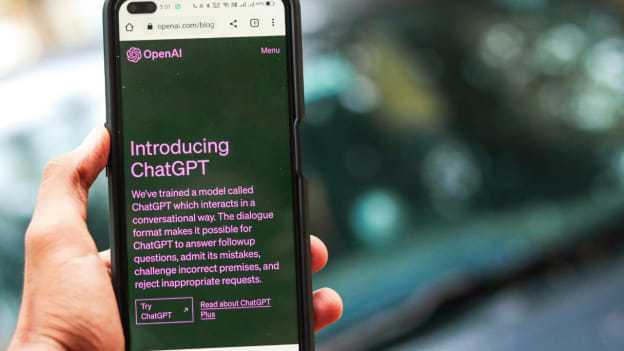
A growing gap between AI tool usage and employee training in Singapore is raising concerns, with 36% using generative AI but 33% lacking formal training. Should employers prioritise AI learning support?
A growing mismatch between the use of AI tools and employee readiness is causing concern among Singaporean jobseekers, according to a new report from Indeed. Launched at the Indeed Talent Trends 2025 forum recently, the Work Ahead study found that while 36% of workers in Singapore are already using generative AI tools in their roles, an almost identical 33% report having received no formal training to do so.
This disconnect is emerging as a critical issue for employers. Without proper support and guidance, workers risk falling behind amid the rapid pace of technological change, which in turn can impede professional growth and dampen retention. The report indicated that workers are increasingly prioritising companies that not only adopt new technologies but also offer support to help employees use them effectively and confidently.
“There’s clearly strong interest among job seekers to build AI skills, but too many are being left behind due to a lack of formal training,” said Callam Pickering, Indeed’s APAC senior economist. “In a job market that’s rapidly evolving, the ability to learn and adapt is becoming a critical advantage. Job seekers will increasingly gravitate towards employers that foster a strong learning culture around AI. For businesses, this is no longer a ‘nice to have’. Offering meaningful AI training is fast becoming a competitive edge in attracting, developing, and retaining top talent.”
The work ahead: How AI is reshaping the workplace in Singapore
According to the report, AI is no longer a future consideration for Singaporean workplaces — it is already reshaping the way people work, collaborate, and make decisions. Since the arrival of generative AI in 2022, it has taken root across multiple industries, accelerating transformation in real time. Singaporean workers are not at the beginning of this journey; they are already in motion, and the pace is picking up.
For many jobseekers, the defining factor when evaluating potential employers is not the presence of AI tools, but the organisation’s commitment to building AI literacy among employees. As Pickering said, career development and inclusive upskilling have become essential, not only for attracting talent but also for retaining it in a market where change is constant and competition is intense.
The report found that more than one in three professionals, 36%, are currently using tools like ChatGPT, Perplexity, and Gemini as part of their daily workflows. Of those using workplace technology, 67% said their employers provide some form of structured training or certification. Furthermore, nearly 77% of respondents said they wanted or would like to receive more training in the next two to five years.
Despite these positive indicators, a persistent sense of anxiety exists. Around 11% of those surveyed reported feeling overwhelmed by the scale of digital transformation taking place, which may affect how they approach future opportunities.
The industry snapshot provided in the report shows that sectors such as human resources and IT are leading the way in digital upskilling, with 89% of HR professionals and 72% of those in finance and IT indicating active tech readiness. Manufacturing follows at 65%, while retail, sales, and travel collectively report 60%. The legal sector trails slightly behind at 59%.
The study also uncovered a gap in technology usage between different job types. Blue-collar workers are more than five times as likely as white-collar workers to report not using any technologies at work — 20% versus 4%. However, the confidence levels in using existing technologies are surprisingly close, with 26% of blue-collar workers and 30% of white-collar workers saying they feel very competent in the tech they use on the job.
Who's leading and who's lagging
Business leaders are setting the pace for digital adoption. Among those currently using workplace technology, 45% of leaders said they are highly confident in their use of technology, compared to just 26% of non-leaders. Additionally, 54% of leaders reported using generative AI tools at work, compared to 42% of non-leaders.
Generational differences also play a role in AI adoption. Over 42% of workers aged 18 to 24 are currently using generative AI tools at work. This figure gradually declines with age: 40% among those aged 25 to 34, 35% for workers aged 35 to 44, 30% for those aged 45 to 54, and only 26% for those aged 55 and above. Yet, the report noted that confidence in using workplace technology is not necessarily tied to age or job title — it is rooted in access, support, and training opportunities.
In particular, insufficient training remains a key hurdle for workers aiming to become AI-ready. The report found that 39% of employees cite lack of training as a primary barrier, with leaders expressing greater confidence in their access to learning than non-managers. Other challenges include the difficulty of keeping up with the rapid pace of change, also reported by 39%, and a lack of early exposure to technology, mentioned by 28% of respondents.
Although optimism about technology remains, it is uneven. Only 36% of workers say they feel optimistic about technology’s role in shaping their careers, while one in ten, 11%, felt overwhelmed and left behind.
Smarter training and consistent upskilling are the key
The findings suggested that employees are far more likely to engage with new technologies when the implementation is done thoughtfully. Workers respond best when the tools are user-friendly and accompanied by clear documentation, with 42% citing this as a confidence booster. Structured workshops are effective for 38% of respondents, while 35% value environments where they can experiment with new tools without fear of failure or judgment.
Pickering emphasised the need for a fundamental shift in how companies design and deliver training: “Employers must take a hard look at existing training programmes and update them to reflect the realities of today’s AI-driven workplace. This means moving beyond one-off workshops and building continuous learning pathways that are tailored, accessible, and linked to real-world tasks employees perform. Embedding AI literacy into onboarding, offering hands-on learning with real tools, and encouraging cross-functional collaboration can help make training more impactful,” said Pickering.
For workers, the process starts early, ideally during the hiring phase. “Raising questions about AI training during interviews not only signals interest in growth but also helps assess whether a potential employer is invested in preparing their workforce for the future,” Pickering added. “Asking how AI is used across teams and what support is available to build relevant skills can open up meaningful conversations right from the start.
Ultimately, as AI tools become more embedded in day-to-day operations, workers are not just looking to use them, they want to grow with them. Confidence, inclusion, and digital readiness have become core elements of career choice and employee satisfaction in Singapore’s evolving workplace.
Topics
Author
Loading...