








Strategic HR
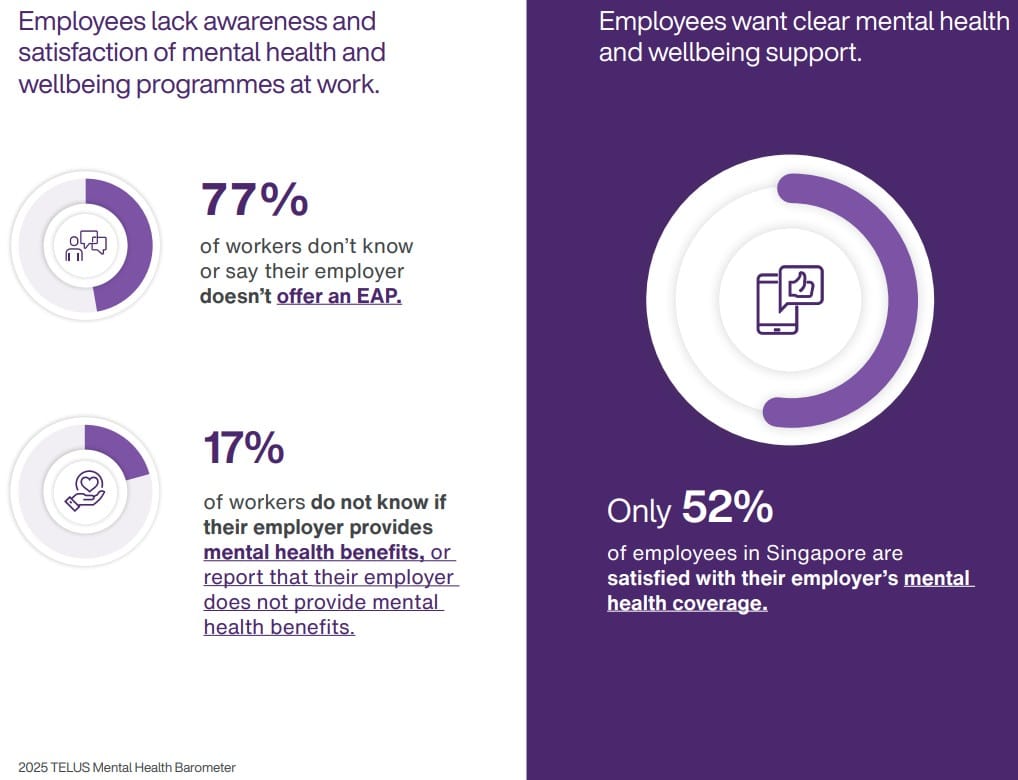
40% of Singapore workers under constant stress, 77% report no EAP access: Study







A positive and supportive workplace gains popularity as 46% of Singapore workers ask for better well-being support over a 10% salary hike.
The mental health of Singapore’s workforce is showing signs of improvement, but financial anxiety continues to cast a long shadow.
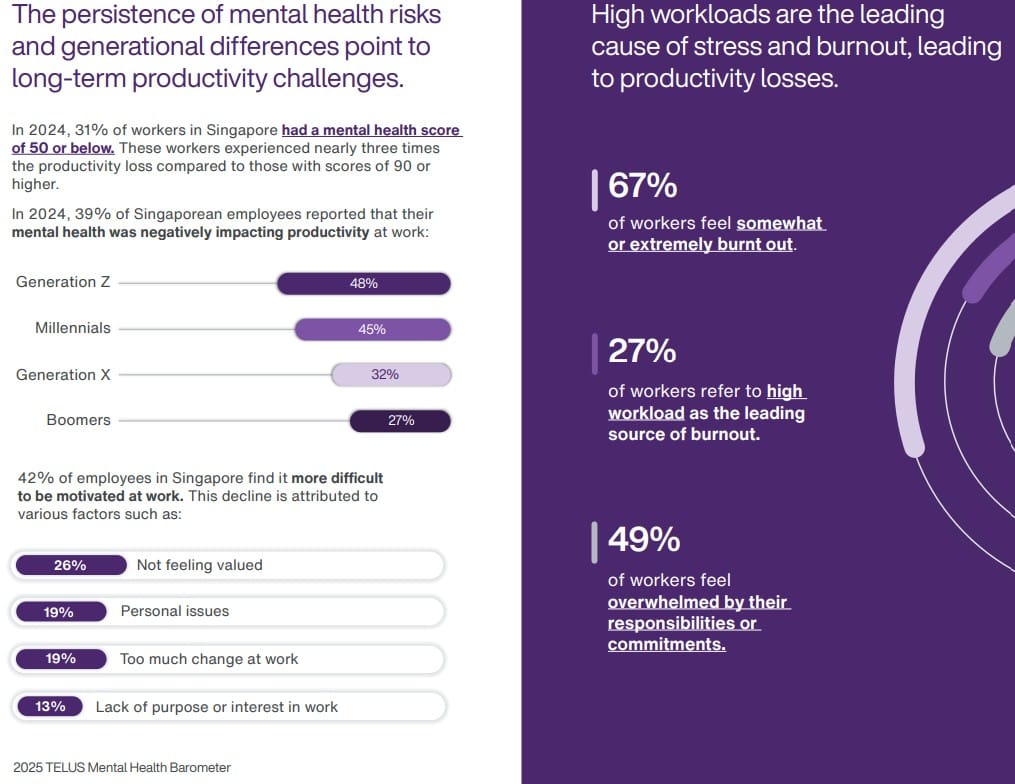
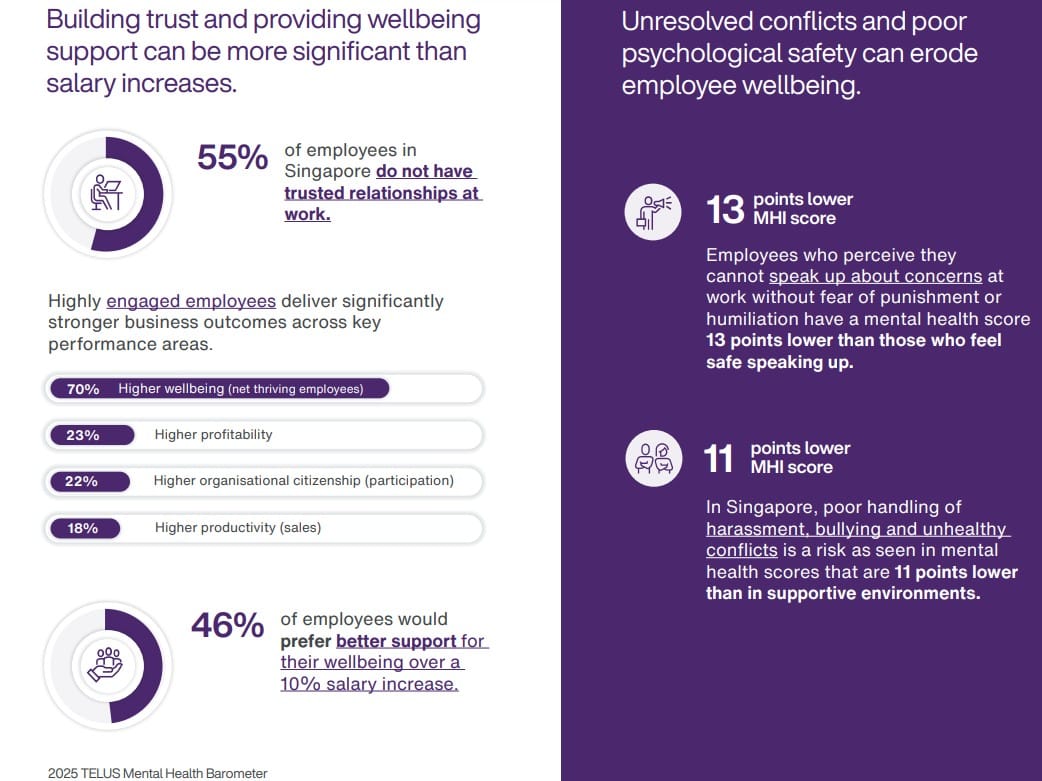
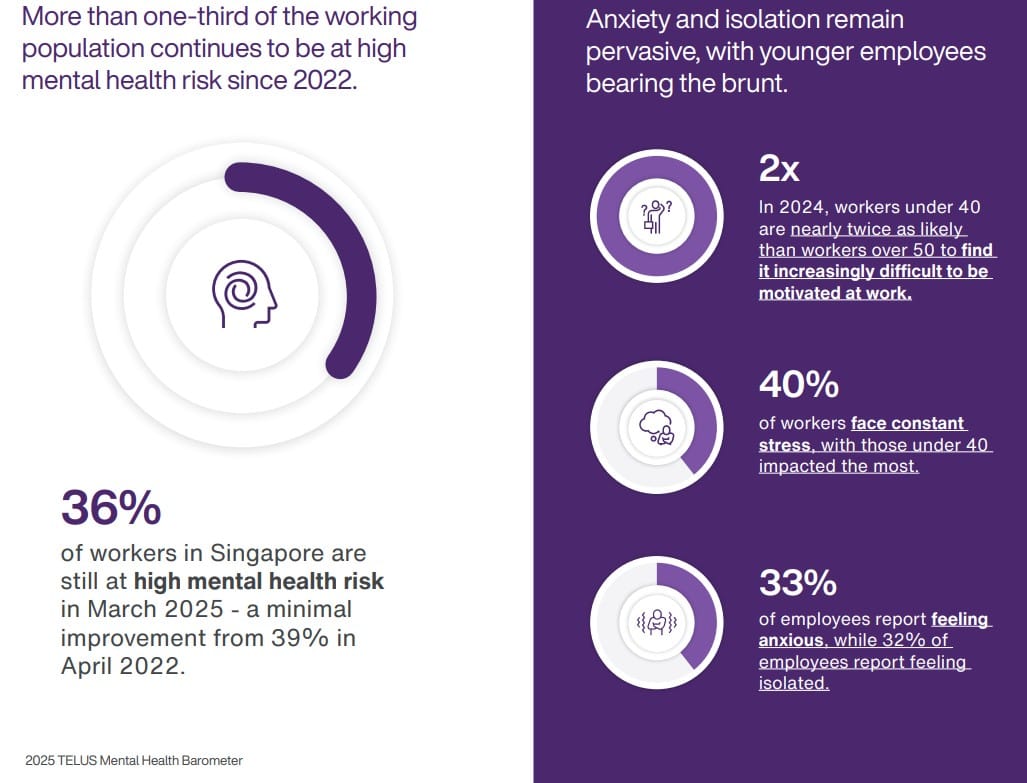
According to the latest Telus Mental Health Index (MHI), Singapore’s workers recorded a mental health score of 63.5, the highest since the index launched in April 2022. The score places most employees in the “strained” category (50–79), suggesting overall progress in resilience and coping mechanisms amid continued economic uncertainty.
The study surveyed 1,000 employees across Singapore, and found that while one in three workers still feels anxious or experiences mental health challenges that impact productivity, the overall trend is positive.
“Despite retrenchments and business closures, more people are coping better with uncertainty,” said Haider Amir, Director of Asia, Global Business Development at Telus Health.
“Growing awareness and better access to support are paying off. Singapore’s preventive approach, where resources are channelled to help people stay well even before issues arise, is yielding results.”
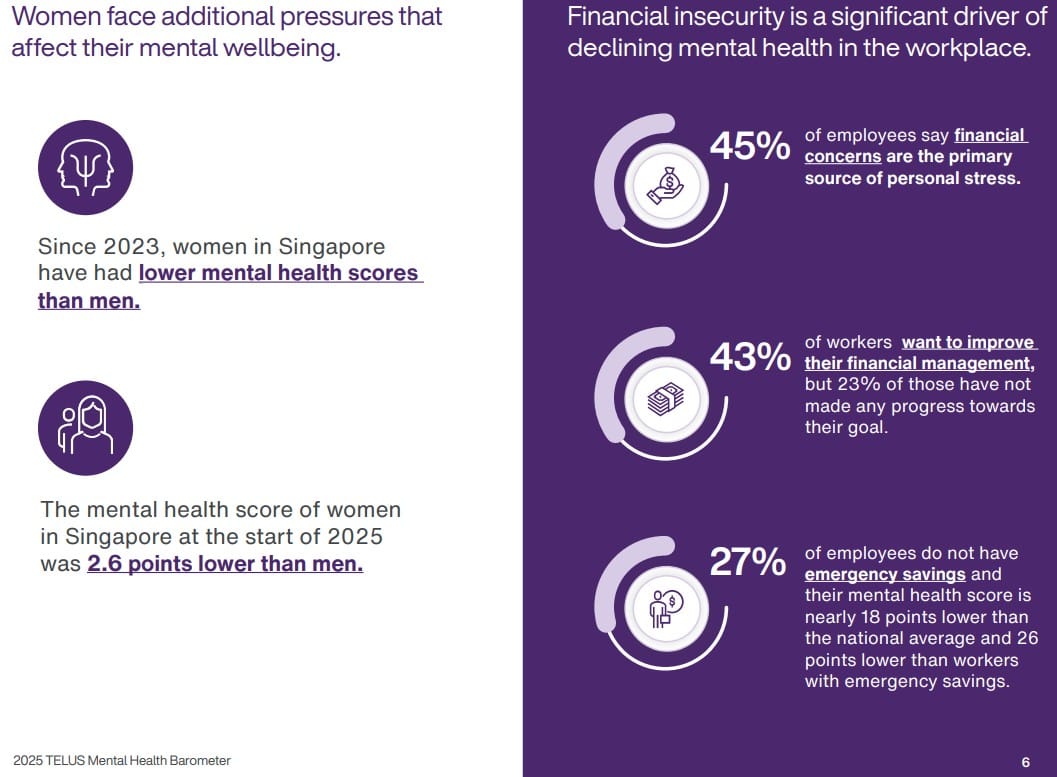
However, financial concerns continue to weigh heavily. The study found that two-thirds of workers worry about meeting daily expenses, while seven in 10 have cut back on spending in recent months due to inflation and economic uncertainty.
Three in 10 respondents reported feeling isolated or depressed, and one in five said they lack emergency savings to cover basic needs. This group reported an average mental health score of just 36.2, compared with 73.2 among workers who have some financial cushion.
The correlation between financial well-being and mental health is stark: workers who struggle to meet basic needs scored 28.7, nearly 35 points below the national average.
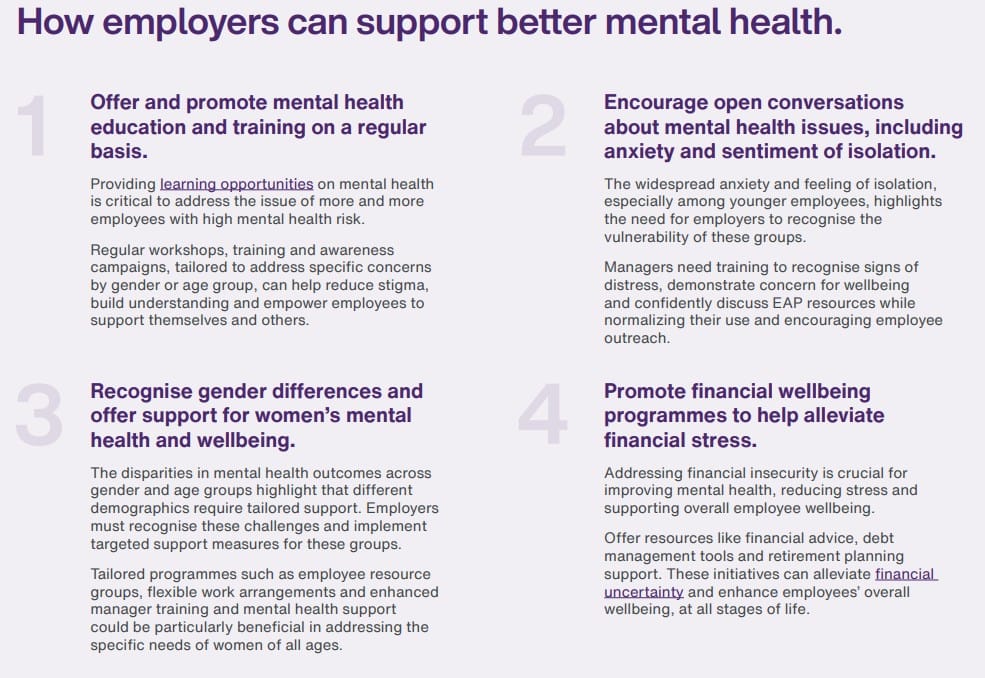
“With Singapore’s cost of living remaining high, organisations can help close this gap by offering flexible benefits, access to counselling, and financial literacy programmes,” Amir noted. “Such initiatives not only build resilience but also reduce stress and support workforce stability.”
Interestingly, the study found that non-parents are twice as likely as parents to feel financially vulnerable.
Parents, Amir explained, tend to have more stable support systems, from dual incomes and tax reliefs to workplace flexibility, that help buffer against financial stress.
Non-parents, particularly younger single adults, often face less stable employment and limited savings, making them more susceptible to economic pressures.
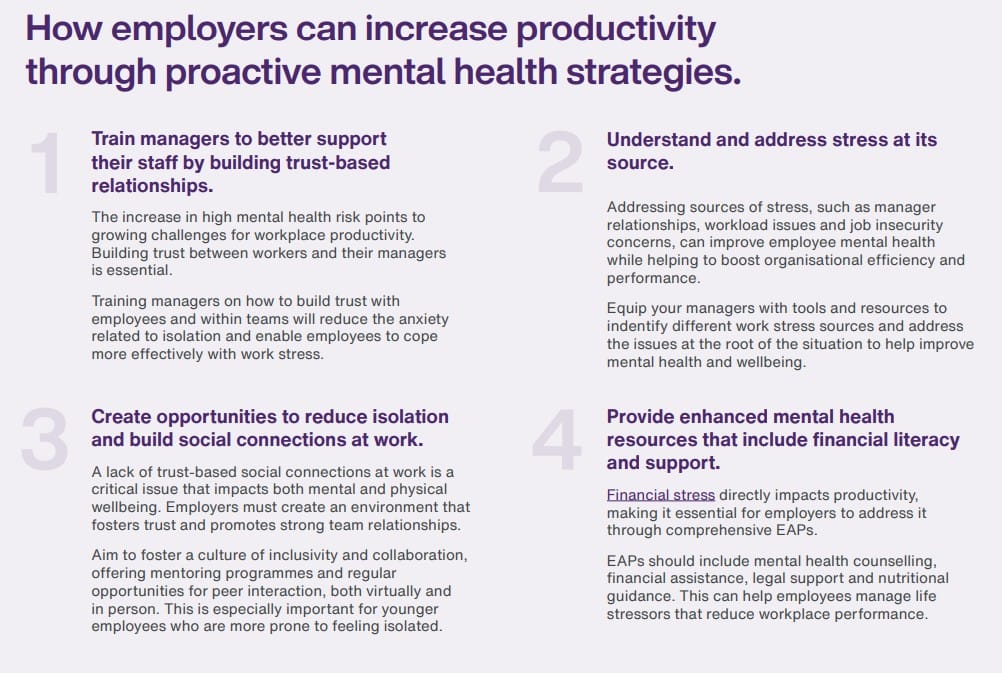
Anxiety remains the lowest sub-score on the MHI, with financial strain and inflation cited as leading causes. Amir emphasised the importance of practical, preventive support, such as financial education, healthy workloads, and better-trained managers who can spot early signs of distress.
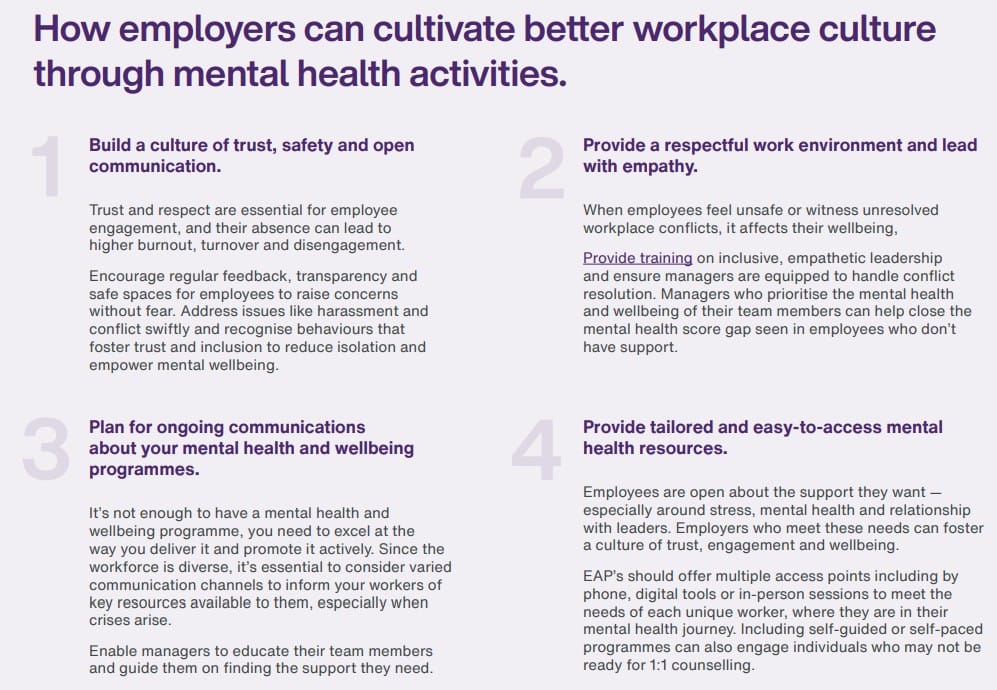
“When workplaces prioritise well-being and encourage open conversations about mental health, employees are more likely to seek help early,” Amir said. “That proactive approach leads to healthier, more resilient teams.”
What employers can do?
While the numbers show a cautiously optimistic picture, Singapore’s workforce continues to walk a tightrope between growing resilience and financial strain, a reminder that mental and financial well-being are deeply intertwined in today’s fast-changing economy.
Author
Loading...