








Strategic HR
Top HR leaders in Manila tackle the future of HR leadership





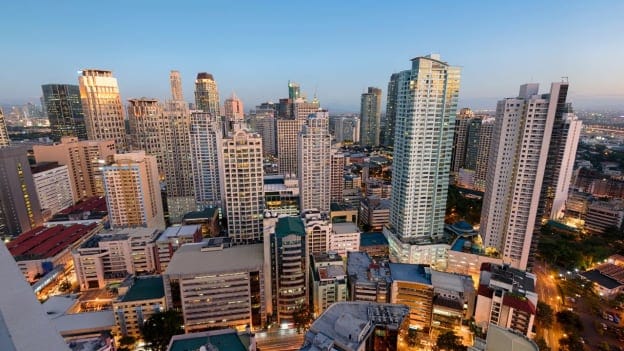
The gathering became a mirror for a profession in transition.
In a sunlit corner of Manila, as the city shook off its early morning hush, a quiet storm of ideas brewed over coffee and conversations. The People Matters Exclusive Leaders’ Breakfast Meet was no ordinary executive event.
It was a space carved out for a candid reflection – where top HR leaders from across industries gathered to address the contradictions, aspirations, and overall mission of their field.
The event featured data from People Matters’ CHRO Effectiveness in Southeast Asia 2025 Research, which captures the rapidly evolving role of CHROs across a region shaped by technological disruption, changing business demands, and rising leadership expectations.
In this environment, CHROs are called to drive transformation, align HR strategy with business outcomes, develop agile HR teams, and contribute meaningfully to C-suite success.
This report offers a comprehensive effectiveness framework and actionable imperatives for both CEOs and CHROs – essential tools to future-proof HR leadership in 2025 and beyond.
Enriching the discussions were insights from:
- Gail Del Rosario, former president, CEO, and country director of Maybank Philippines
- Nonoy Nuyles, country HR head of HSBC Philippines
- Gigs Patanao, CHRO of Hijo Resources Corporation
- Nerissa Berba, EVP and chief people officer of Security Bank Corporation
- Alvanson So, regional people lead of Canva
- Ria Hidalgo, senior HR director - JAPAC of Oracle Philippines
- Jakeson Quiatchon, assistant vice president - HR of Power 4 All.
At the heart of the discussion lay a paradox that continues to define the HR function: CEOs want their HR leaders to steer the organisation towards the future, yet HR’s day-to-day reality remains stuck in the demands of the present.
The metrics that dominate CHRO scorecards still measure the past – employee engagement, turnover, payroll accuracy – while the expectations placed on the role are increasingly about what is ahead: digital readiness, workforce reinvention, and culture transformation.
This disconnect is more than a misalignment – it’s a missed opportunity.
Tugged between present and future
While nearly 80% of CEOs in Southeast Asia expect their HR heads to lead the future-readiness agenda, most CHROs are spending less than a fifth of their time doing so. What is causing this lag? It’s not for lack of ambition – far from it.
Many HR leaders harbour aspirations to move into broader business roles or even CEO positions. But ambition doesn’t always equate to access, especially in organisations still accustomed to viewing HR through an administrative lens.
Transformation, it turns out, is not just about systems, but about structural and cultural readiness. A progressive CHRO can only drive real change when the executive team – and the board – is equally committed to rethinking how people strategy fuels business growth. Without that alignment, the best-laid plans in HR are reduced to PowerPoint dreams.
The quiet revolution in the fields
While the theme of digital transformation dominated the conversation, one story stood out not for its futuristic flair, but for its grounded urgency.
In the agriculture sector, HR is not just a business partner; it is a social architect. As the country’s food systems face generational disinterest and shrinking participation, particularly among youth, agribusinesses are grappling with a sobering reality: the future workforce may simply not show up.
It’s easy to forget that farmers are part of the workforce ecosystem too, and their disengagement threatens more than one supply chain. The work is physical, often thankless, and layered with stigma.
HR in this sector is working to restore dignity to the profession and rewriting what it means to build a career from the soil up. In this context, future-readiness takes on a different hue: it’s about survival, not just succession.
AI: Friend, foe, or frenemy?
In the tech-forward corridors of startups and multinationals, artificial intelligence is emerging as both enabler and disruptor. The new mantra, “AI-augmented, not AI-replaced,” captures the balancing act CHROs are now expected to perform. Productivity may soar with automation, but so does anxiety. Particularly in regions where tactical and process-driven jobs abound, AI is not just another tool; it’s an existential threat.
The challenge isn’t to slow the pace of automation, but to accelerate the pace of reskilling. That means HR must shift from being compliance custodians to capability builders. Helping employees work with AI rather than fear it may become one of the most important retention strategies of the next decade.
Succession: The strategy waiting for development
For all the talk of future-readiness, one area remains chronically underdeveloped: succession planning. The problem is not a lack of belief in its importance – most HR leaders agree that succession is essential. The problem lies in execution. Too often, it’s treated as an annual task, rather than an ongoing business imperative.
Succession shouldn’t just be a leadership concern. It should extend two or three levels down, creating a bench, not just backups. And it must be data-informed. If succession conversations continue to be guided by gut feel and familiarity, rather than predictive analytics and objective readiness assessments, organisations risk replicating blind spots rather than breaking them.
Building the business-ready HR bench
Escaping the clutches of business as usual starts with the team beneath the CHRO. A startling number of HR leaders admit they do not have a clear successor. That’s not just a talent gap; it’s a risk to business continuity.
Creating a pipeline of business-savvy HR professionals requires more than training. It calls for deliberate exposure to other functions, markets, and decision-making frameworks. Rotations into business roles, international stints, and lateral movements that deepen context, not just competence, are crucial.
There’s also a mindset shift under way. Career progression is no longer a straight line up. Sometimes it means stepping sideways, or even backwards, to leap ahead later. HR teams, often the architects of development journeys for others, must now design similarly brave paths for themselves.
A new scorecard for a new era
Perhaps the most urgent question of the morning was deceptively simple: if the current HR scorecard doesn’t reflect CEO expectations, why aren’t we rewriting it?
The most impactful HR metrics of the future may not be tied to engagement or retention rates, but to workforce planning accuracy, succession pipeline depth, and the organisation’s readiness to pivot. The challenge is to build a scorecard that honours operational excellence while rewarding strategic foresight.
Some organisations are already experimenting with minimalist scorecards: three bold KPIs instead of 30. Others are reframing HR not as a service provider but as a capability architect. And crucially, more CHROs are demanding the freedom to delegate operational tasks to make room for long-range visioning.
From policy keepers to social architects
The CHRO role is no longer confined to policies and payroll. It is now a strategic role, guiding organisations through uncertainty, ensuring not just growth but relevance.
HR leaders are being asked to navigate AI, rebuild trust, future-proof workforces, and even resurrect declining sectors. They are expected to be legal-savvy, data-literate, empathetic, and ruthlessly strategic all at once.
This event was a mirror held up to the profession, a subtle but stirring call to arms. The next chapter of HR will be authored by those bold enough to challenge their own job descriptions.
Loading...