








Strategic HR
Nearly 20% firms actively reducing headcount as a direct result of AI adoption: EY report







HR and recruiting functions are expected to be among the most affected, with 30% of employers anticipating AI-driven role replacements in these areas.
Despite widespread anxiety that artificial intelligence will trigger mass job losses, a new global survey suggests the reality inside organisations is far more measured.
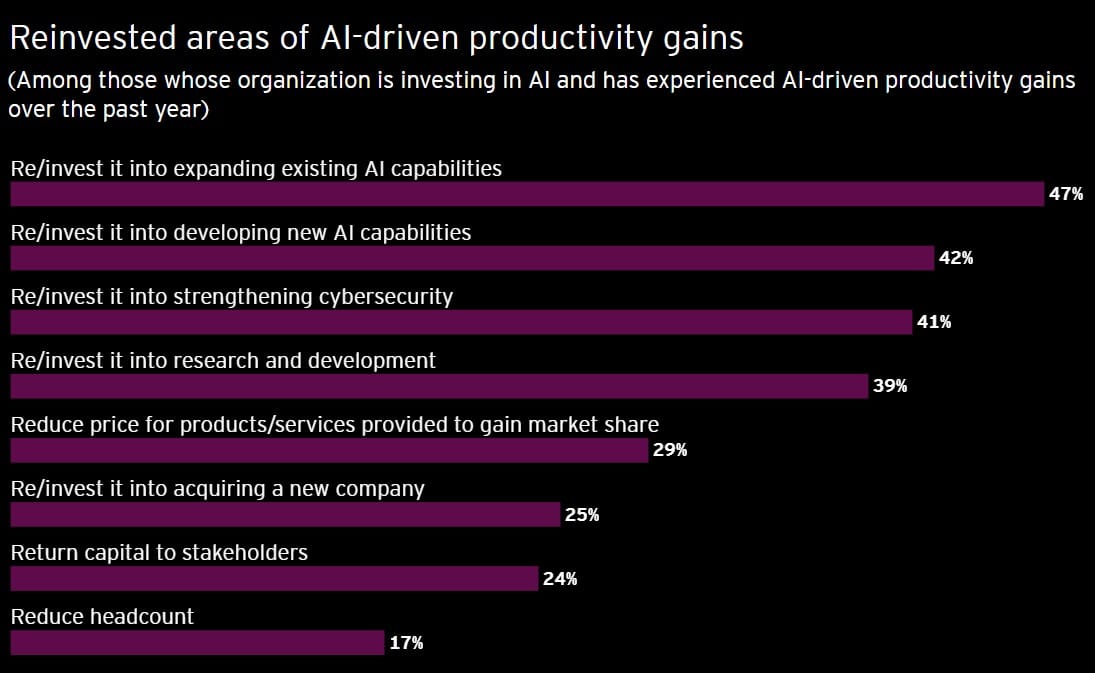
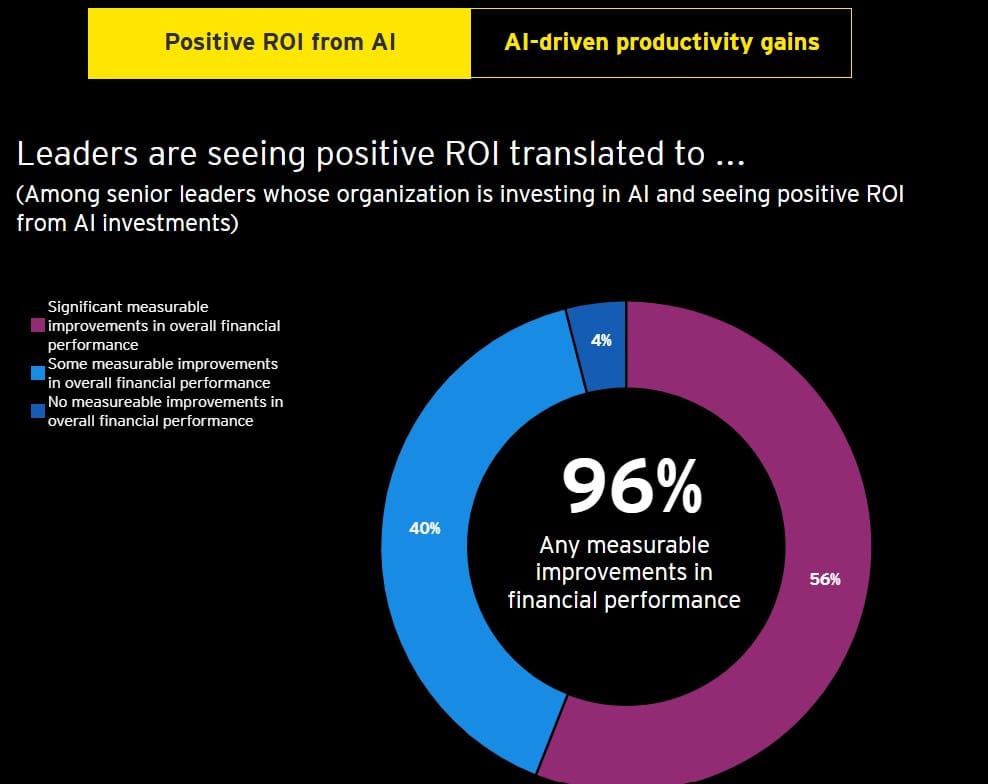
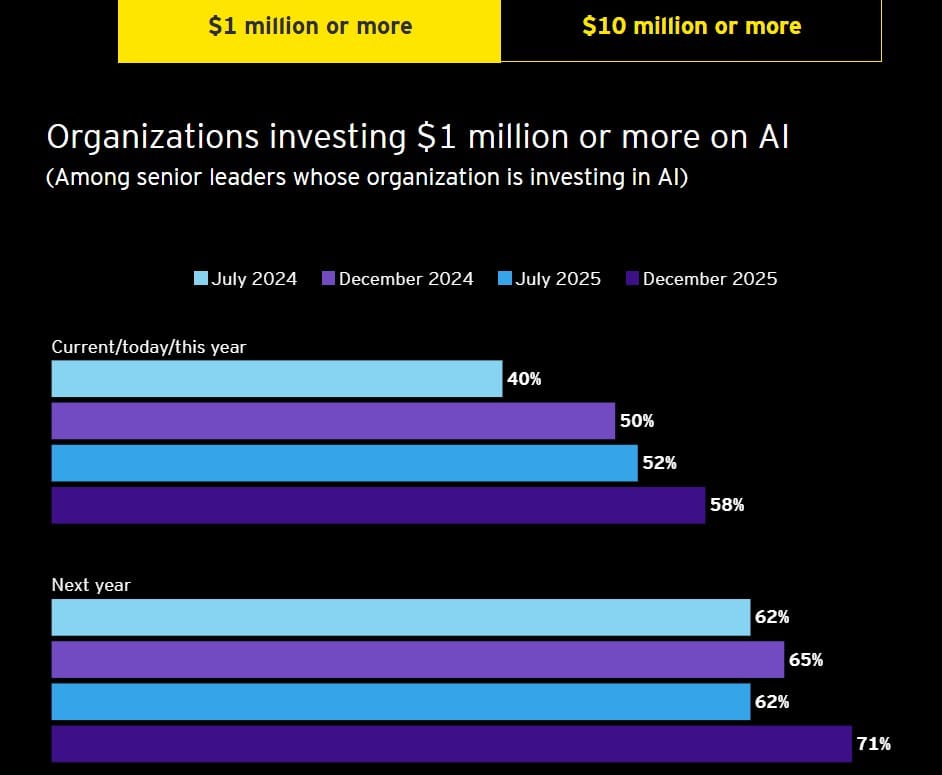
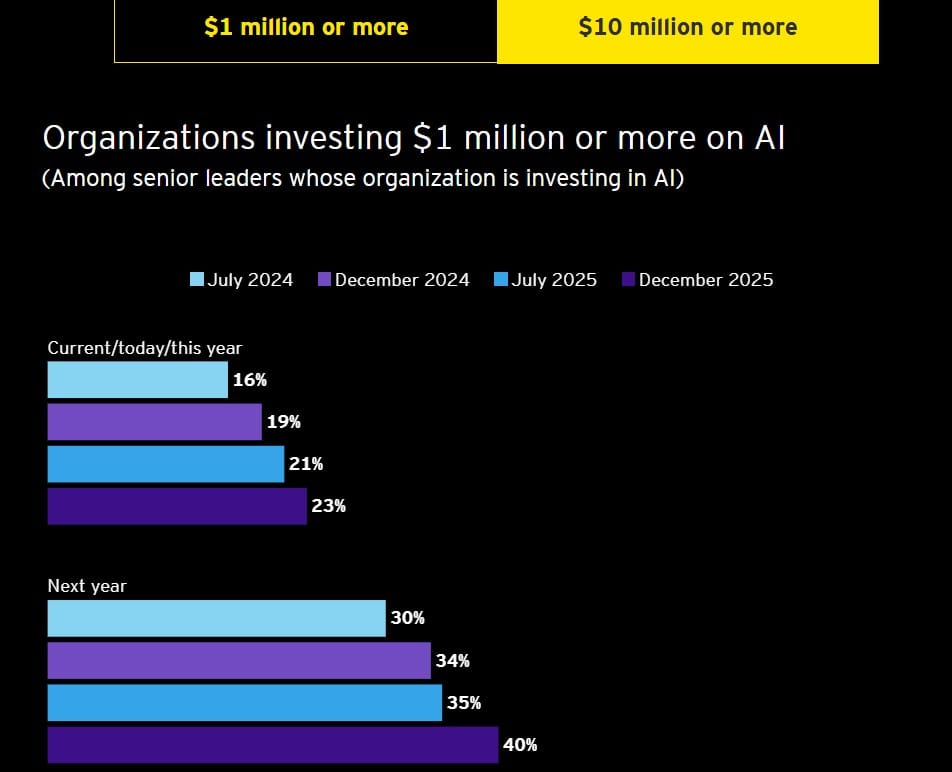
According to EY’s latest AI Pulse Survey, only 17% of organisations are actively reducing headcount as a direct result of AI adoption, challenging the dominant narrative that machines are rapidly replacing human workers.
Instead, the report points to a more nuanced shift, where companies are choosing to reinvest productivity gains back into their workforce.
More than a third (38%) of employers that are already seeing returns from AI said they are channeling those gains into upskilling and reskilling existing employees.
A further 34% are using the productivity boost to hire external talent with specialised AI expertise, while 32% are redirecting gains towards executive compensation and bonuses.
Cost-cutting, often seen as the default outcome of automation, appears to be a secondary priority. Just 31% of organisations said they are optimising processes to reduce overheads, and fewer than one in five are trimming staff numbers.
“The true power of AI is not as a jobs-killer but as a strategic enabler that keeps humans, and their strengths, at the centre and focuses more on growth than on AI replacing jobs,” the report noted.
The findings arrive against a backdrop of high-profile layoffs and warnings from global leaders that have fuelled fears of an AI-driven workforce contraction. Globally, Commonwealth Bank in Australia previously cut roles as part of its AI transformation before reversing the decision.
Amazon CEO Andy Jassy has also publicly stated that the company’s workforce is likely to shrink over time as generative AI and autonomous agents become more deeply embedded across the business.
Other data suggests the disruption is real and accelerating. Research from AI Resume Builder found that 21% of companies have already replaced specific roles with AI in 2025, with another 30% planning to do so in 2026.
HR and recruiting functions are expected to be among the most affected, with 30% of employers anticipating AI-driven role replacements in these areas.
Yet this survey indicates that many organisations are attempting to balance AI-driven efficiency with ethical responsibility.
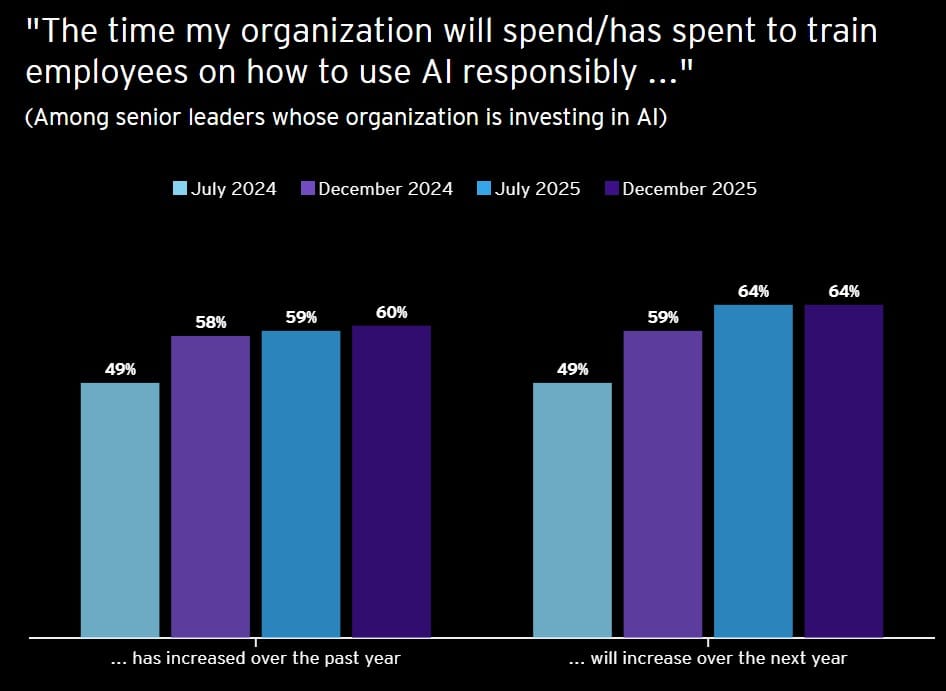
60% senior leaders in the report said the time spent on responsible AI training for employees has increased over the past year, with the same proportion expecting that commitment to grow further in the year ahead.
Meanwhile, 66% of organisations said they will prioritise ethical AI operations, and 60% expect to intensify their focus on managing AI-related risks.
Transparency is also emerging as a critical pillar of AI strategy.
Nearly two-thirds (63%) of leaders said their organisations plan to increase transparency with customers about how AI is used, up from 55% last year.
“Productivity gains are usually framed around what is removed: hours of tasks and money saved. For many managers, it’s easier to first drive AI adoption, which is crucial and easier to measure. We must challenge ourselves to consider what is added, the value-added activities, the innovation, the outcomes that were always discussed as a possibility off on the horizon that never seemed to arrive until now,” said Dan Diasio, EY Global Consulting AI Leader.
“Trust and transparency are the ultimate licence to operate as AI diffuses throughout the enterprise,” Diasio added. “Companies are realising that if they want to turn productivity gains into long-term value, they must prove to their workforce and customers that their systems are not just powerful, but responsible.”
As AI continues to reshape workplaces worldwide, the report suggests the future of work may be defined less by widespread job losses and more by how organisations choose to integrate technology alongside human capability.
Author
Loading...