








Strategic HR
Volkswagen to cut 50,000 jobs and 1 million units of production capacity by 2030






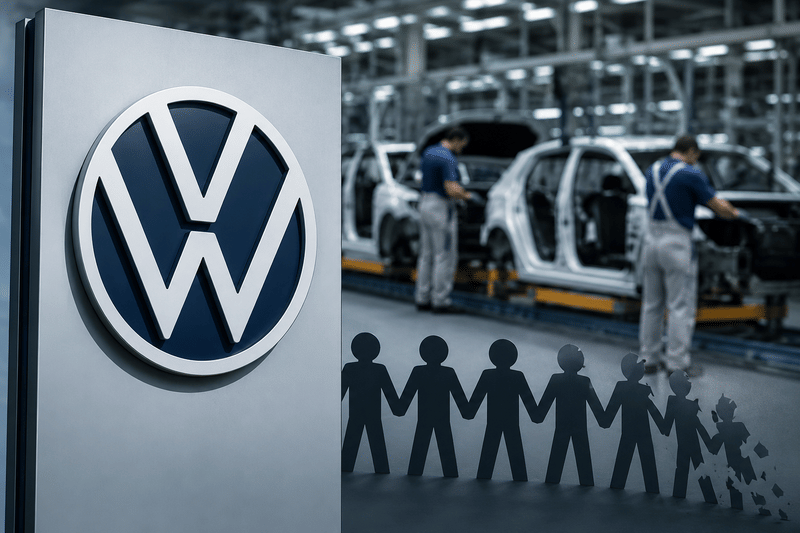
Volkswagen is preparing one of the most significant restructurings in its history, cutting jobs, reducing production capacity and simplifying its vehicle portfolio as it responds to weaker demand, rising costs and growing competition.
Volkswagen plans to eliminate 50,000 jobs and reduce annual production capacity by 1 million vehicles by 2030 as part of a sweeping global restructuring programme designed to restore profitability and improve competitiveness.
The measures were outlined by Oliver Blume, Chief Executive Officer of Volkswagen AG, during the company's annual general meeting on 18 June. According to details published by Reuters and reported by industry publications, the German automotive giant is seeking to create a leaner organisation with fewer models, fewer platforms and a production footprint more closely aligned with market demand.
The restructuring reflects mounting pressure on global carmakers as slowing demand, intensifying competition from Chinese manufacturers, geopolitical uncertainty and the costly transition towards electrification reshape the industry.
Workforce reduction forms a key pillar of the overhaul
Volkswagen said the workforce reduction will affect several parts of the group, including Volkswagen, Audi, Porsche and software subsidiary Cariad.
According to the company, the plan includes:
- 50,000 job reductions by 2030
- 35,000 positions to be eliminated within Volkswagen AG
- More than 28,000 departures already covered by binding agreements
- Workforce reductions concentrated primarily in Germany
Volkswagen said the cuts are intended to lower fixed costs while preserving investment in strategic growth areas, including software, electrification and future vehicle technologies.
Production capacity set for major reduction
Alongside workforce cuts, Volkswagen intends to significantly reduce global manufacturing capacity.
According to comments previously made by Blume to German publication Manager Magazin and cited by Reuters, the company is considering reducing annual production capacity by another 1 million vehicles.
The move would bring Volkswagen's global production capacity to approximately 9 million vehicles annually, down from the 12 million vehicles previously planned.
Management said the adjustment is designed to address persistent overcapacity, particularly in Europe, where demand has yet to return to pre-pandemic levels.
The company increasingly views the industry's challenges as structural rather than temporary, prompting a longer-term reassessment of factory utilisation, investment priorities and workforce requirements.
Fewer models, fewer platforms, fewer complexities
Volkswagen also plans to simplify its vehicle portfolio as part of the transformation programme.
Blume told shareholders the company intends to reduce complexity across the business by focusing resources on vehicles capable of delivering stronger sales volumes and higher returns.
The strategy includes:
- Fewer vehicle models
- Fewer model variants
- Fewer production platforms
- Reduced electronic architecture complexity
- Greater regional alignment of product portfolios
While Volkswagen has not identified specific vehicles for discontinuation, management indicated lower-volume products could face greater scrutiny as the company seeks to improve efficiency and reduce development costs.
Savings targets drive restructuring efforts
Volkswagen has linked the restructuring programme to ambitious financial goals. The company aims to achieve:
- An operating return on sales of 8% to 10% by 2030
- Annual net savings exceeding €6 billion
- Higher cash generation from its automotive operations
Management reported the company had already achieved approximately €1 billion in sustainable cost effects during 2025 through workforce measures and efficiency programmes.
Volkswagen also said production costs at its German factories fell by more than 20% on average during 2025, highlighting early progress in its restructuring efforts.
China and Europe emerge as key pressure points
The restructuring comes as Volkswagen faces growing challenges in two of its most important markets.
In China, domestic manufacturers have rapidly expanded their presence in electric and connected vehicles, increasing competitive pressure on international brands.
In Europe, weaker demand and excess manufacturing capacity continue to weigh on profitability.
According to Volkswagen, these market realities have made it increasingly difficult to justify maintaining complex product portfolios and underutilised production assets.
Electric vehicles remain central to growth plans
Despite the cost-cutting measures, Volkswagen continues to invest heavily in electrification and software development.
The company said it launched more than 30 models in 2025 and plans to introduce another 20 vehicles during 2026 as part of what it describes as the largest product offensive in its history.
Volkswagen also reported:
- 32% growth in global battery electric vehicle deliveries during 2025
- 66% growth in electric vehicle deliveries across Europe
- A 27% share of the European electric vehicle market
The company is also advancing technology partnerships with Xpeng in China and Rivian in Western markets as it seeks to strengthen software and vehicle development capabilities.
A permanent shift in strategy
Volkswagen's latest restructuring marks a significant departure from an industry model built around production volume and scale.
Instead, the company is prioritising profitability, operational efficiency and product focus as it navigates a rapidly changing automotive landscape.
With 50,000 jobs set to disappear, factories facing lower production targets and model line-ups being streamlined, the transformation is among the most far-reaching in the company's recent history. How effectively Volkswagen balances cost reduction with continued investment in electrification and software will play a crucial role in determining its competitiveness over the remainder of the decade.
New leaders, fresh capital, workforce shifts and unfiltered conversations — the story of work unfolds here.
Topics
Author
Loading...