








Wellbeing
72% of Singapore workers take sick leave after poor sleep: Survey







Insufficient sleep is closely linked to mental health and workplace performance, as after a poor night’s rest, 38% of respondents reported difficulty concentrating, while 33% experienced irritability and 32% said their stress levels increased.
Employees in Singapore are increasingly calling in sick after sleepless nights as a widening gap emerges between awareness of sleep’s importance and the ability to maintain healthy sleep habits, according to a new global survey.
The report on Global Sleep Survey by ResMed, which gathered insights from 30,000 people across 13 countries including 1,000 respondents in Singapore, found that while workers widely recognise sleep as critical for long-term health, many struggle to turn that knowledge into consistent behaviour.
More than half of respondents in Singapore (51%) ranked sleep as the most important contributor to long-term health, and 86% acknowledged that consistent, quality sleep can help extend a healthy lifespan. However, the results reveal a persistent gap between awareness and action: 57% said they get a good night’s sleep only four nights a week or fewer.
The survey also points to a growing trend of employees taking so-called “snooze days”. Around 72% of respondents said they had called in sick at least once in the past year after a poor night’s sleep, highlighting how sleep deprivation is beginning to affect workplace attendance and productivity.
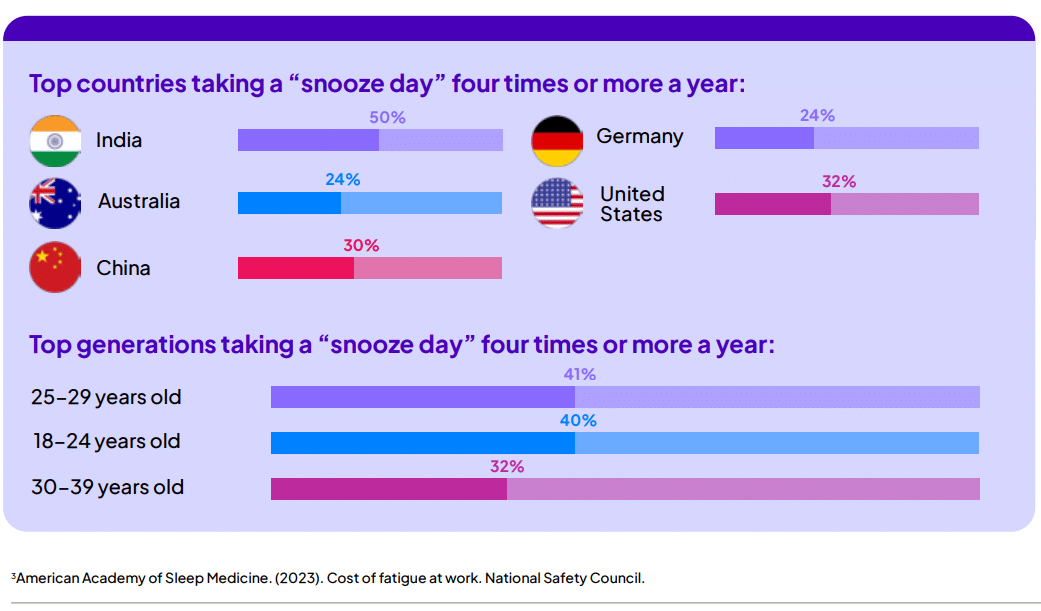
Heavy workloads appear to be a major factor. More than half of respondents (53%) said demanding work schedules negatively affect their sleep. At the same time, 58% reported that flexible working arrangements help them better manage their rest, suggesting that workplace policies may play an important role in addressing sleep health.
Technology is also reshaping how people monitor their sleep. Use of wearables for sleep tracking among Singapore respondents jumped sharply from 21% in 2025 to 65% in 2026, with smartwatches leading the trend at 59%. Among those using wearables, 54% said they would seek medical advice if their device flagged a potential risk.
Despite this growing reliance on technology, follow-through remains limited. While 60% of respondents said they would consult a healthcare provider for persistent sleep issues, only 16% have actually done so. Just 32% reported that a healthcare professional had asked about sleep during a routine medical visit.
The survey also found that insufficient sleep is closely linked to mental health and workplace performance. After a poor night’s rest, 38% of respondents reported difficulty concentrating, while 33% experienced irritability and 32% said their stress levels increased.
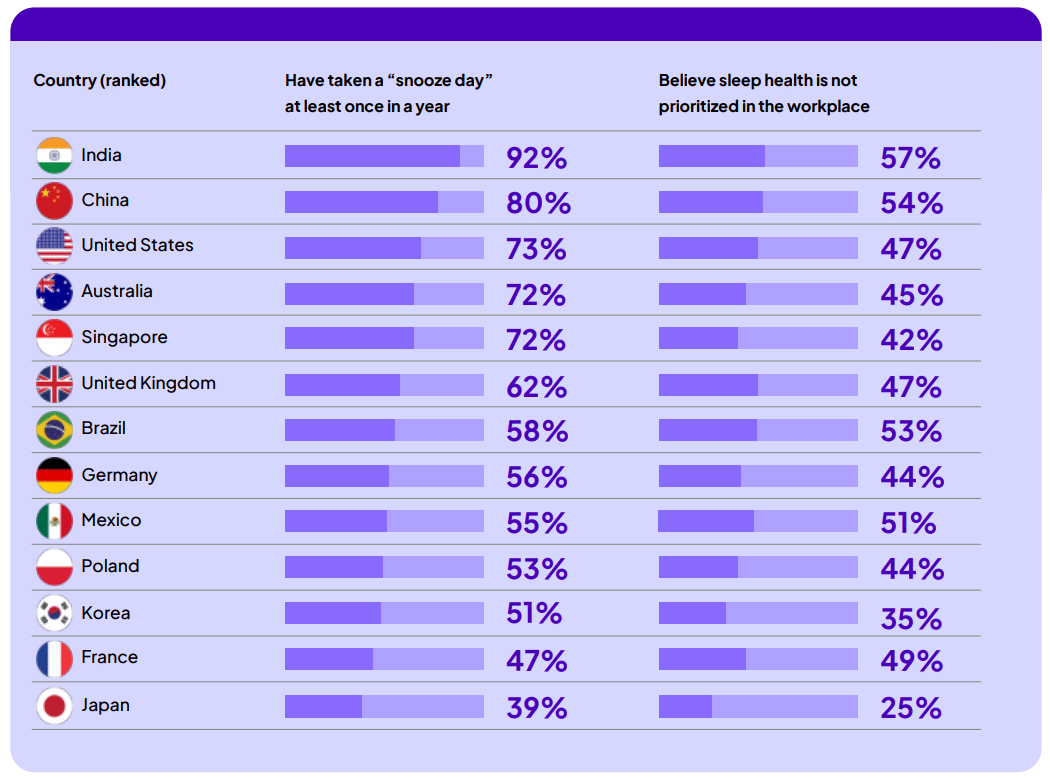
Public awareness around sleep education appears strong. About 82% of respondents believe sleep health should be taught in schools from an early age, and the same proportion say adequate sleep contributes to physical attractiveness due to its role in cellular repair and skin health.
Some coping habits, however, may be counterproductive. Around 8% of respondents reported turning to alcohol to help them fall asleep, despite evidence that alcohol can disrupt sleep later in the night and increase the risk of sleep disorders such as sleep apnea.
“People are increasingly recognising sleep as a cornerstone to long-term health, which is encouraging,” said Dr Carlos Nunez, Chief Medical Officer at ResMed. “But recognition alone is not enough. We need to help people move from awareness to action by addressing everyday barriers and improving access to screening, support and care.”
Author
Loading...