









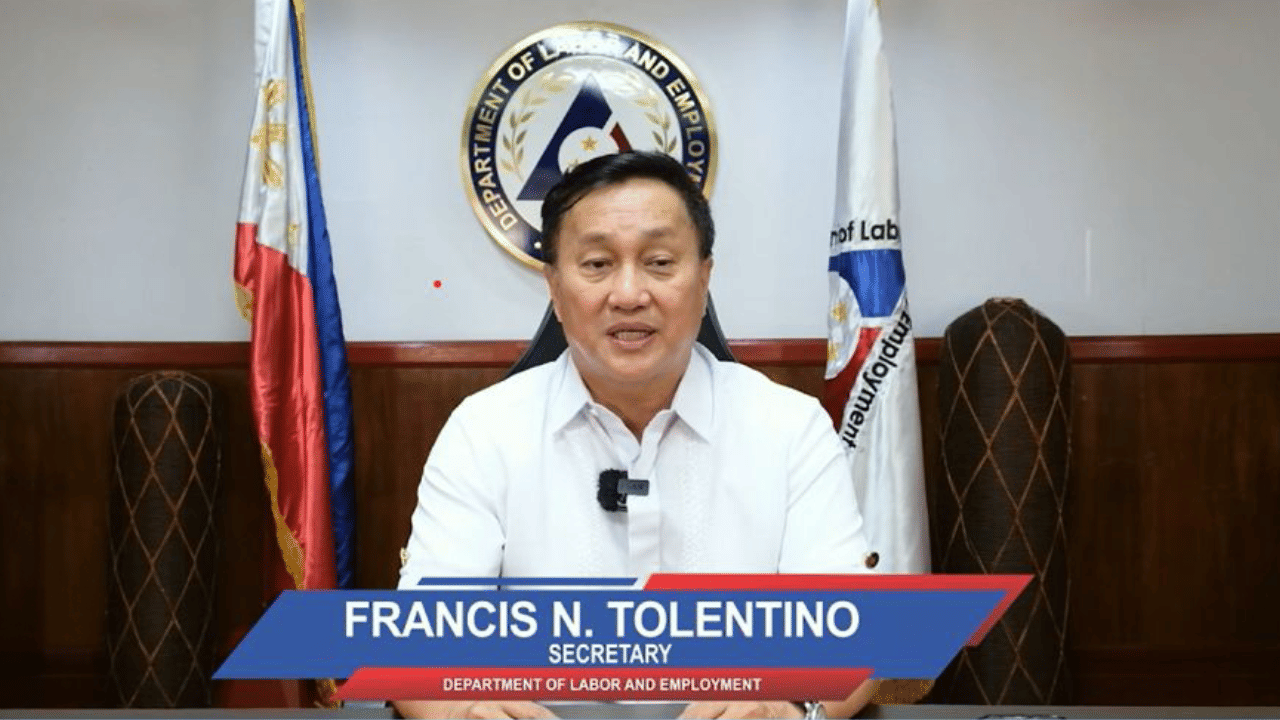
The Philippines has called for a human-centred approach to artificial intelligence (AI), urging governments and employers to ensure that technological advancement strengthens rather than undermines workers' rights and livelihoods.
Speaking virtually at the 114th International Labour Conference in Geneva, Francis N. Tolentino said AI is rapidly reshaping the world of work and must be deployed in a way that protects jobs, labour rights and human dignity.
“AI must complement human labor, not replace human dignity and judgement,” Tolentino said.
The labour secretary said AI presents significant opportunities to boost productivity, innovation, economic growth and public service delivery. However, he cautioned that poorly managed AI adoption could disrupt labour markets, displace workers and weaken workplace protections.
“Technology must move the country forward, but it must never leave workers behind,” he added.
Tolentino said the Philippine government is implementing measures to help workers and businesses adapt to digital transformation. These include the Telecommuting Act, which provides protections for employees working remotely, and the Enterprise-Based Education and Training Act, which supports technical and vocational skills development.
He also highlighted the Philippine Skills Framework for Analytics and AI, which outlines the competencies required for emerging AI-related occupations and aims to prepare workers for future job opportunities.
According to Tolentino, the transition to an AI-driven economy must be inclusive, particularly for older workers, young labour market entrants, women and those engaged in vulnerable forms of employment.
To support workforce readiness, the Department of Labor and Employment (DOLE) continues to promote lifelong learning initiatives, digital skills training and gender-responsive employment policies.
The department is also expanding its use of digital technologies to improve labour market services. These efforts include AI-powered job matching through PhilJobNet, integration with the government's E-Gov application, and round-the-clock chatbots that provide information on wages, productivity training and technical services.
By the end of 2025, PhilJobNet had registered 2.5 million jobseekers and 39,336 employers, reflecting growing adoption of digital employment services.
Tolentino said the Philippines will continue collaborating with the International Labour Organisation (ILO) and its tripartite partners to ensure AI-driven innovation supports economic progress while safeguarding workers' interests.
The remarks align with broader discussions at the conference, where governments, employers and labour representatives are examining how AI can be harnessed to create decent work while addressing concerns around job displacement, skills gaps and workplace protections.