









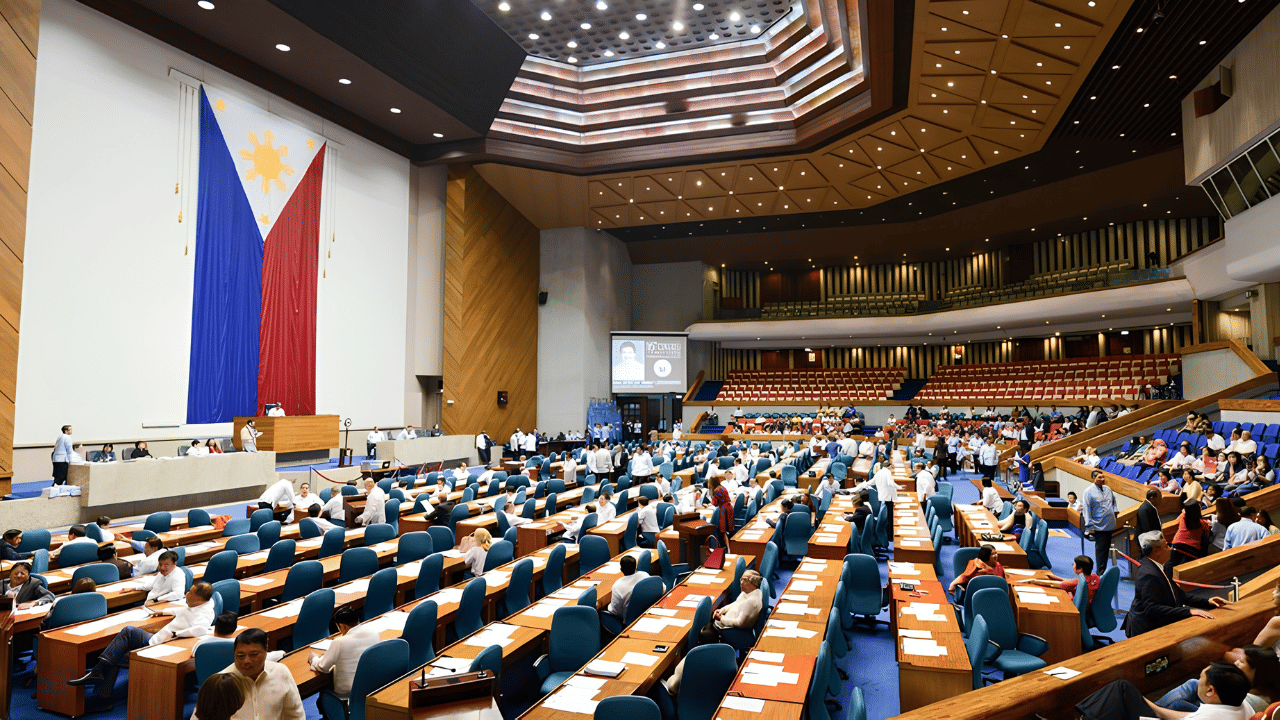
The Philippine House of Representatives has approved on second reading a measure seeking to strengthen workplace safety protections and hold employers accountable for willful or grossly negligent violations of occupational safety and health (OSH) standards.
House Bill No. 10559, sponsored by House Committee on Labor and Employment Chairperson Ramon “Jolo” Revilla III under Committee Report No. 552, aims to update the country’s OSH framework to address emerging risks, including extreme heat, severe weather and other climate-related hazards.
Revilla called for the immediate passage of the bill, stressing that workers should not have to put their health or lives at risk to earn a living.
“Health should not be sacrificed for livelihood. Life should not be sacrificed for a job,” Revilla said during the plenary session on Tuesday.
He said changing environmental conditions are creating new occupational risks, particularly for workers whose jobs require them to work outdoors. Construction workers exposed to extreme heat, as well as employees required to report during heavy rains and severe weather, increasingly face hazards linked to climate change.
Under the proposed legislation, employers would be required to integrate climate-adaptive measures into their workplace safety programmes. The bill would also strengthen the Department of Labor and Employment’s research mandate to identify emerging occupational hazards associated with changing environmental and climatic conditions.
The measure also proposes tougher penalties for OSH violations that result in serious injury or death. Revilla stressed that the bill is not intended to criminalise ordinary workplace mistakes, but to hold employers accountable when they knowingly or grossly negligently disregard safety risks.
These could include failing to address identified workplace hazards or ignoring deficiencies in employee training and protective equipment.
“It is not enough to simply say that a company has an OSH programme,” Revilla said. He questioned whether employers are adequately prepared to protect workers from risks such as extreme heat and typhoons before accidents occur.
“We are not punishing mistakes. We are holding accountable the deliberate disregard for safety,” he added.
The proposed changes come as extreme weather and climate-related disruptions increasingly affect working conditions in the Philippines. The measure seeks to move workplace safety beyond traditional hazards and require employers to anticipate risks arising from changing environmental conditions.
Separately, another proposed measure, House Bill No. 4435 or the Calamity Pay Law, seeks to provide additional financial protection to workers who are required to report for duty during dangerous conditions.
The bill proposes a 30% additional compensation for public and private employees required to work despite circumstances such as a declared state of calamity, severe disaster impacts, Signal No. 3, a red rainfall warning or an officially declared work suspension.
It would cover workers in essential sectors including healthcare, transport, media, food supply, relief operations and utilities.
The proposal would also protect employees who cannot report to work because of a calamity or imminent danger from a reduction in pay or disciplinary action.
Employers that deliberately refuse to provide the proposed calamity pay could face a fine of up to P100,000 or imprisonment of between six months and one year.
Together, the proposed measures reflect growing efforts to strengthen worker protections as extreme weather and other emerging risks reshape workplace safety requirements in the Philippines.