










A recent report highlighted the soaring demand for remote and flexible work options, and Aon’s latest findings show just how closely Singapore’s employers are keeping pace.
The report titled, 2025 Aon Employee Benefits Survey, shows that flexible work has firmly entered the mainstream, with four in five employers now offering such arrangements. It found that 81% of organisations in Singapore provide flexible working options, making it one of the most widely offered benefits today. And more than half (53%) also offer flexible benefits, underscoring the growing focus on work-life balance and personalised employee support.
“Flexible work arrangements and flexible benefits are offered by more than half of employers, indicating a strong commitment to work-life balance and adapting to evolving and diverse employee needs,” the report noted. The additional findings from the report are:
A growing priority in inclusive workplaces
Flexible work now ranks just behind core life and health benefits, and traditional time-off policies like marriage and compassionate leave. The rise in adoption aligns closely with the government’s drive to promote more inclusive and progressive workplaces.
In late 2024, Singapore mandated that employers must formally consider employee requests for flexible work arrangements, including flexi-time, flexi-place, and flexi-load. While employers can still reject requests, the guidelines encourage them to discuss alternatives with employees to find workable solutions.
It also shows that while core time-off entitlements remain widely supported in Singapore, enhancements to statutory leave are far less common.
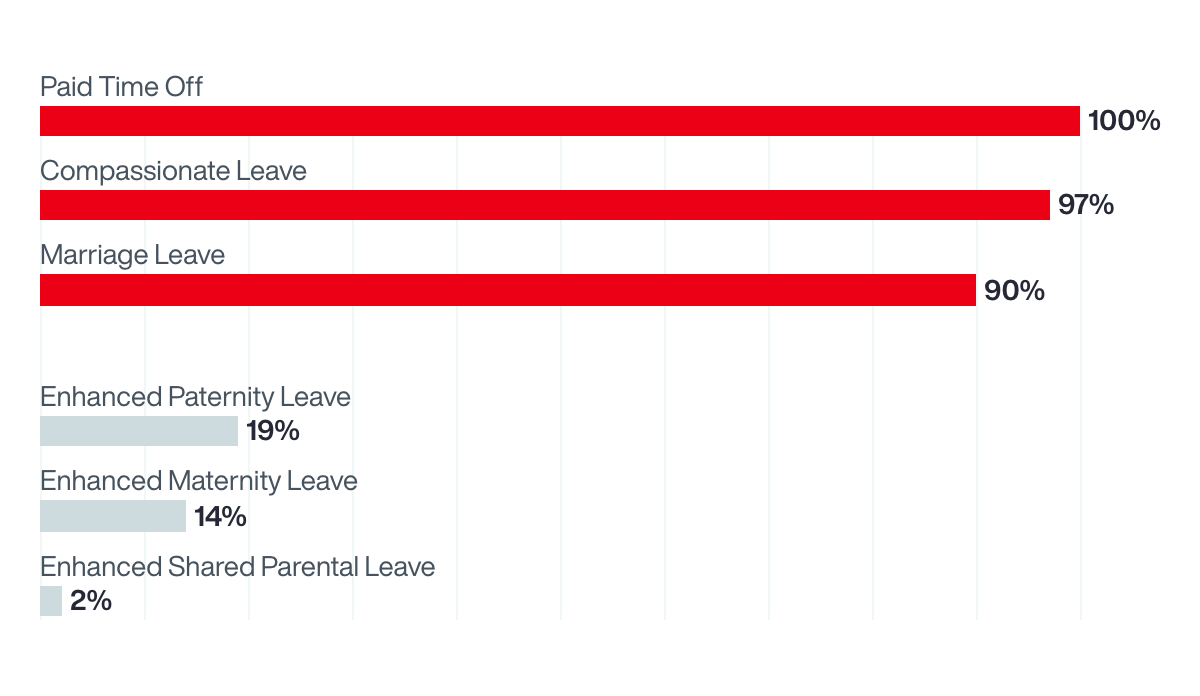
Vacation leave is universal across all employers surveyed, with compassionate leave (97%) and marriage leave (90%) also firmly established benefits.
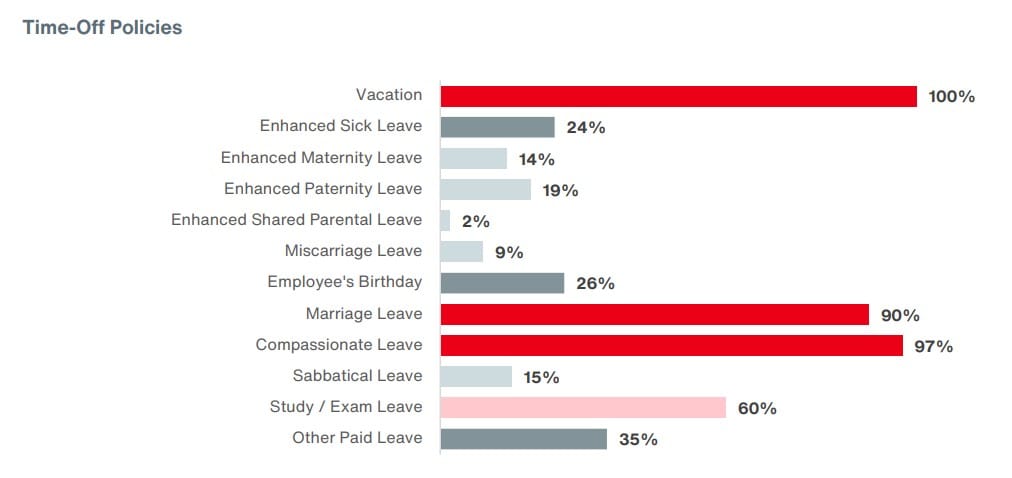
More than half of organisations offer study or exam leave (60%), but support tapers off for other categories such as enhanced sick leave (24%) and birthday leave (26%).
Parental-related enhancements remain especially limited, only 14% provide enhanced maternity leave, 19% offer enhanced paternity leave, and just 2% extend shared parental leave beyond statutory requirements. Miscarriage leave is available in only 9% of companies, underscoring how extended or family-centric benefits are still emerging in Singapore’s benefits landscape.
Mental wellbeing support rising, but awareness lags
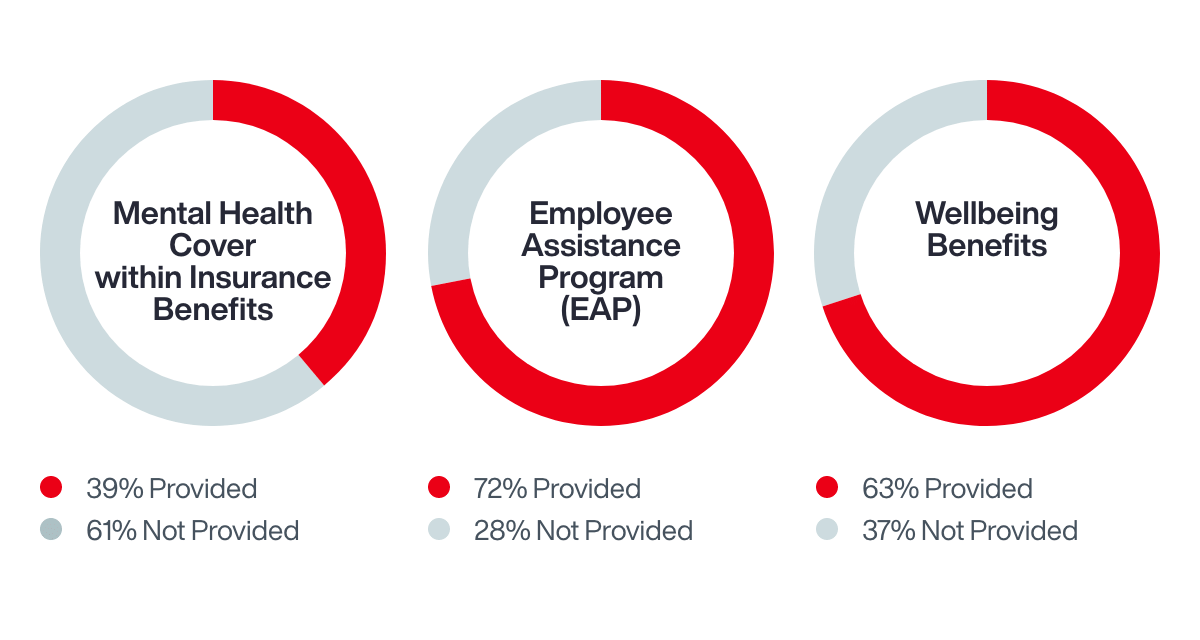
The report also shows strong employer focus on employees' wellbeing, with 72% offering Employee Assistance Programmes (EAPs), and 63% providing broader wellbeing benefits.
However, mental health insurance coverage remains limited, even as organisations use EAPs and flexible benefits to support psychological wellbeing.
This emphasis comes against troubling workforce trends as shown in 2025 TELUS Mental Health Index:
36% of employees in Singapore remain at high mental health risk
67% feel somewhat or extremely burnt out
Significant numbers report stress (40%), anxiety (33%), and isolation (33%)
Despite the widespread availability of EAPs, the TELUS report revealed low awareness among employees.
Benefits landscape, where’s the gap
The report highlighted several additional trends across Singapore:
Core life and medical benefits remain essential and nearly universal.
Disability income, as well as health benefits for fertility, menopause, and transgender care, remain uncommon.
Paid Time Off, compassionate leave, and marriage leave are widely offered.
Fewer than 20% of employers enhance maternity, paternity, or shared parental leave beyond statutory requirements.