








AI & Emerging Tech
The AI Shift 2030: The risk we are not talking about






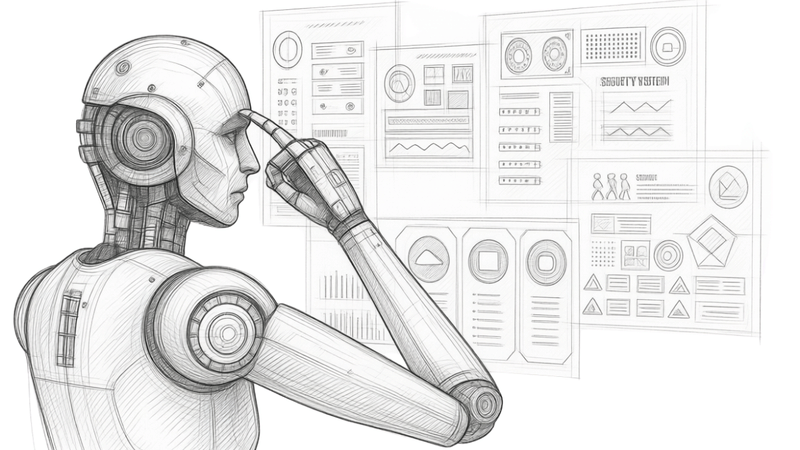
If AI automates entry-level work, organisations must rethink how people build experience, make reskilling a shared responsibility, and evolve workplace culture alongside the changing nature of work.
This article was first published in the latest edition of People Matters Perspectives.
I've been thinking about a question that rarely makes it into the AI and jobs debate: if AI takes over the work through which people learn, how will the next generation learn to work?
Almost every day, another AI headline lands in my inbox.
A company launches a new AI agent. Another announces an automation push. Another restructures its workforce. And then comes the inevitable question:
Is AI taking our jobs? After spending little time writing about the workplace and following how companies are responding to AI, I've started thinking that we may be asking the wrong question.
Because I don't think the most important story is that AI will eliminate work. I think the bigger story could be what happens to the work that comes before expertise.
The junior role. The repetitive task. The first draft. The basic analysis. The work that might look replaceable from the outside, but is often how someone learns to become good at something. And strangely enough, we've seen a version of this story before.
We've been here before
I find myself looking backwards whenever the conversation around AI becomes too apocalyptic.
The printing press transformed the work of scribes. Mechanised looms disrupted textile workers. Electricity changed factories and created jobs that didn't exist before. Calculators removed hours of manual arithmetic. The internet disrupted travel agencies, video stores and traditional media while creating entirely new industries.
The pattern is remarkably consistent.
Technology makes some tasks less valuable. Then people find new things to do. “Computer” was once a job title. People were employed to perform calculations by hand before machines took over much of that work.
The job disappeared. The word stayed. But I don't think history gives us permission to be complacent about what is happening now.
The people living through those transitions didn't know which new jobs were coming. They only knew that the work they understood was changing.
The Luddites are a good example. They weren't simply angry people resisting progress. They were workers watching machines threaten the livelihoods they depended on.
New industries eventually emerged. That doesn't mean the transition was painless. And that distinction matters when we talk about AI today.
The real AI risk may not be job losses
There are plenty of forecasts about what the AI economy could look like by 2030.
The World Economic Forum estimates that 92 million jobs could be displaced globally while 170 million new roles could emerge. On paper, that's a net positive. But numbers like these make me wonder about something else.
Who gets the experience needed for those new jobs?
A junior analyst doesn't become a senior analyst overnight.
A graduate doesn't become a strategist without first doing the smaller pieces of the work.
A customer service employee doesn't start with the hardest customer conversations. They learn the business by handling the straightforward ones first.
The routine work is often the training ground. And routine work is exactly where AI is getting good. That's why I think the career ladder deserves more attention than the jobs number.
If AI takes away the tasks that once gave young workers their first experience, we may end up with fewer entry points into professional careers.
The question then isn't simply: “How many jobs will AI create?” It's: “How will people get their first job in an AI-powered economy?” I don't think we have a clear answer yet.
AI can create. Humans still have to decide.
There's another reason I'm not convinced the human role disappears as quickly as some predictions suggest.
AI is becoming remarkably good at producing things.
A report.
A marketing campaign.
A product formula.
A piece of code.
A first draft.
But producing something and knowing whether it is worth producing are two very different things. Earlier this year, Mamaearth co-founder Ghazal Alagh spoke about testing an AI-generated shampoo formula with her R&D team. AI could work within specific constraints and provide a starting formulation.
But then came the human questions. Is it safe? Does it actually work? Will customers like it? Does it make sense for the brand? That distinction keeps coming back to me.
AI can generate the answer. Humans still have to decide whether it's the right answer.
And as machines become better at production, I suspect judgement, taste, creativity, context and emotional understanding will become even more valuable. The blank page may no longer be the difficult part. Knowing what deserves to be on it might be.
But adaptation isn't equally available to everyone
This is where my optimism about AI becomes more complicated. We talk about “reskilling” as if everyone has the same opportunity to do it. They don't.
A software engineer can spend a weekend experimenting with a new AI tool. A marketer can take an online course. A knowledge worker can test a new workflow between meetings. But what about someone working shifts on a factory floor? What about a retail employee whose schedule is already tightly managed?
What about a small business owner who is trying to keep the business running while technology changes around them? The ability to adapt is becoming a competitive advantage.
But the resources required to adapt aren't distributed equally. And even where training exists, training doesn't automatically become behaviour.
When deadlines are tight, people tend to return to what they know. I've seen that with workplace technology before. I don't see why AI should be any different.
Not every company is moving at the same speed
Another thing I think we miss in the AI conversation is how uneven adoption actually is.
Some companies are already experimenting with AI agents and redesigning workflows around them. Others are still figuring out basic automation. And there are plenty of small businesses where AI is barely part of the conversation. That matters.
A global company can dedicate teams and budgets to AI transformation. A local retailer or family-run manufacturer may simply be trying to manage customers, inventory and cash flow. So I don't think the AI transition will arrive everywhere at once.
It will happen in pockets. Some industries will move quickly. Some will move slowly. Some businesses may not change until they have to.
That makes the idea of a single “AI workplace of 2030” feel increasingly unrealistic to me.
So, where does that leave us?
I don't think AI will make humans irrelevant.
History makes me fairly confident about that. But history also tells me that technological change can create winners and losers long before the new equilibrium becomes visible.
That's why I keep coming back to the career ladder. The biggest risk may not be that AI takes all the jobs. It may be that AI takes the jobs that taught us how to do the jobs that come next.
If organisations automate the entry-level layer, they will need to rethink how people gain experience. If reskilling becomes essential, access to it cannot simply become an individual's responsibility. And if AI changes the texture of everyday work, workplace culture will have to change with it.
We've been through technological revolutions before. The machines changed. The work changed. People adapted.
But this time, I think we have a chance to be more intentional about what happens in between. Because perhaps the biggest question of the AI workplace isn't whether humans will still have work. It's whether we'll leave enough room for humans to learn how to do it.
Topics
Author
Loading...