








Economy Policy
How US tariffs are reshaping Asia's labour landscape



|
Updated on


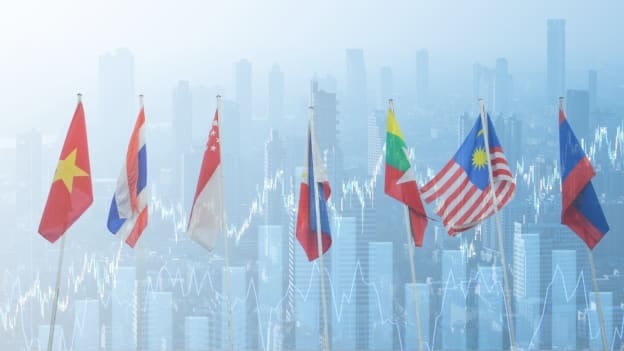
US tariffs are redrawing the economic map of Asia. While some job markets are getting crushed, others are booming. So, who are the winners and losers in this new trade game?
A profound shift in United States trade policy under the second Trump administration is fundamentally reshaping global commerce, particularly Asian economies. What began as targeted tariffs against China has expanded into a widespread regime impacting the entire region, creating complex challenges for Asian labour markets and their integration into world markets.
Asian labour markets currently face what experts describe as a “pincer effect.” Direct US tariffs, imposed by the Trump administration on exports from the Association of Southeast Asian Nations (ASEAN) and other key Asian economies, are raising production costs and compressing corporate margins. This immediately threatens job losses and wage stagnation in export-oriented sectors.
Simultaneously, a surge of manufacturing capacity displaced from China, seeking new production bases to circumvent its own high tariffs, intensifies regional competition. This dynamic further pressures wages and accelerates corporate drives toward automation as a means to maintain competitiveness.
A new global trade order and legal uncertainty
The contemporary global trade system is increasingly defined by the strategic application of tariffs, a departure from the multilateral, rules-based order of the past. An aggressive US trade policy, which escalated actions against China, has expanded into a broad tool of economic and geopolitical leverage.
April 2025 marked a critical turning point when the Trump administration unveiled a sweeping expansion of its tariff policy, moving beyond China to target nearly every country under the principle of "reciprocal" tariffs.
Following a 90-day negotiating period, new tariff rates were set on August 1, 2025, for 66 countries, the European Union, and Taiwan. While China faces a 30% tariff, many of its neighbors secured lower, though still substantial, rates. Key Southeast Asian nations like Vietnam, Indonesia, Malaysia, the Philippines, and Thailand negotiated rates of 19% or 20%. India was subjected to a higher 25% tariff. Other major Asian economies such as South Korea and Japan secured a 15% rate.
However, the legal foundation for these sweeping tariffs remains contentious. The Trump administration invoked emergency powers under the 1977 International Emergency Economic Powers Act (IEEPA). On May 28, 2025, the US Court of International Trade ruled that the tariffs overstepped executive power, invalidating the IEEPA-based tariffs and permanently enjoining their enforcement.
The US government immediately appealed this ruling to the US Court of Appeals for the Federal Circuit, which granted a stay the next day, reinstating the tariffs while it considers the appeal. Oral arguments were heard on July 31, 2025, with several appeals court judges expressing skepticism that IEEPA authorises the President to impose tariffs. This legal uncertainty adds another layer of complexity for businesses navigating the new trade environment. The case is widely expected to reach the US Supreme Court.
Reconfiguring supply chains: Beyond 'China plus one'
The tariff regime has rapidly reconfigured global supply chains. The long-popular “China Plus One” strategy, once a straightforward tactic for cost optimisation, has now become a complex and urgent exercise in risk management. Nations across Southeast Asia, particularly Vietnam, Thailand, Malaysia, and Indonesia, initially emerged as primary beneficiaries of this shift due to their proximity to China, competitive labour costs, and established manufacturing ecosystems.
Even Chinese firms began expanding into ASEAN to avoid US tariffs and diversify their own supply chains. For instance, Apple Inc. significantly increased iPhone assembly in India and expanded iPad and AirPods production in Vietnam to reduce reliance on China.
However, the Trump administration shattered the perception of Southeast Asia as a safe haven by extending its tariff regime to the region in 2025. This was driven by concerns over "transshipment" of Chinese goods through ASEAN nations.
New tariff frameworks include severe penalties for illicit transshipment, such as a punitive 40% tariff for Vietnam on any items found to be illegally rerouted. This crackdown neutralises the "China Plus One" strategy's primary advantage, exposing companies to new risks and compliance challenges.
Businesses are now exploring more resilient, long-term strategies, such as developing regionalised supply chains or adopting a "US Plus One" model, like nearshoring to Mexico, to serve the North American market directly.
Despite these challenges, Foreign Direct Investment (FDI) flows into ASEAN have remained robust, reaching an all-time high of $224 billion in 2022 and $229.8 billion in 2023. The US was the largest investor in ASEAN in 2023, contributing $74.4 billion.
However, the extension of tariffs to ASEAN nations introduces a significant risk, as it directly taxes the output of many US-owned or US-facing facilities, potentially chilling future US investment.
Strategic responses across the region
Asian nations, particularly in Southeast Asia, have engaged in high-stakes diplomatic and economic balancing acts. Access to the US market is increasingly being traded for large, strategic purchases of American goods and services. Vietnam, initially facing a substantial threat of 46% tariffs, negotiated its rate down to 20% by pledging to increase purchases of American products, including military hardware.
Indonesia secured a more favourable 19% rate by committing to buy an estimated $15 billion in US energy products, dozens of Boeing aircraft, and agricultural goods, effectively erasing its trade surplus with the US. Malaysia negotiated a 19% tariff by pledging to spend up to $150 billion over five years on American high-technology products.
These varied outcomes have created a new, tariff-based competitive hierarchy. Countries that secured lower rates, such as Indonesia and Vietnam (19-20%), now perceive a competitive advantage over nations facing higher duties like India (25%).
The Philippines, with a 19% tariff and exemptions for key electronics exports, is seen as an attractive destination for firms diversifying from China. Investments approved by the Philippine Economic Zone Authority (PEZA) are projected to generate 32,983 direct jobs in the first half of 2025, a 30.58% increase year-on-year.
Conversely, smaller, less diversified economies like Cambodia are acutely vulnerable. The 19% US tariff on its crucial garment, footwear, and travel goods (GFT) industry is projected to increase production costs by 15-20%. This severe margin compression threatens the viability of many factories and puts an estimated 150,000 jobs, predominantly held by women, at immediate risk.
India also faces challenges, with its 25% tariff, compounded by an unspecified "penalty" for continued Russian oil and military purchases, impacting vital labour-intensive sectors such as textiles and apparel.
The human capital equation: Adapting to change
These macroeconomic shifts are profoundly altering employment patterns, exacerbating skills shortages, and intensifying pressures on wages and labour conditions across Asia. This is leading to an accelerated bifurcation of the region's job market.
The impact on employment is uneven. In labour-intensive sectors, job destruction is evident. In Cambodia's GFT industry, the 19% tariff is leading to reduced hours, precarious subcontracting, and layoffs, with 150,000 jobs at high risk. India's textile and apparel sector faces similar pressures, with US buyers demanding discounts to offset the 25% tariff, leading to order cancellations and putting shipments on hold.
In more diversified economies, the impact manifests as hiring freezes and strategic downsizing; for example, in Malaysia's lower-value electrical and electronics sector and Thailand's automotive industry, where major manufacturers have announced job cuts.
Conversely, supply chain relocation is fostering job creation in certain sectors and countries. The Philippines, due to its favorable tariff rate and electronics exemptions, has seen significant job growth through new investments. Malaysia's industrial parks are attracting investment and creating jobs in high-value sectors such as advanced electronics, medical devices, and green technology manufacturing.
The accelerated skills imperative
The Trump tariff regime is accelerating a pre-existing challenge: a structural mismatch between workforce skills and modern industrial needs. Intense competitive pressure forces companies to rapidly move up the value chain, innovate, and adopt Industry 4.0 technologies like automation and AI to offset higher costs and remain profitable. This creates a massive demand for high-skilled workers.
Thailand's transition to EV manufacturing alone is expected to require over 77,000 new high-skilled positions by 2029. Demand is surging for AI-literate technicians, digital systems operators, and green technology experts. Existing educational and vocational training systems are largely unprepared for this demand, creating a critical bottleneck. The ILO estimates that automation could put as many as 137 million workers across the five largest ASEAN nations at risk over the next two decades, particularly in textiles, clothing, and footwear,
Several Southeast Asian labour markets are adapting to this challenge. Governments and organisations are stepping up efforts to equip youth with future-oriented skills. Indonesia is also driving efforts to prepare its youth for a digital economy.
In the Philippines, the Department of Science and Technology (DOST) has launched an AI for Development Program, focusing on democratising access to AI tools, building regional capacities, and launching upskilling programs. Singapore also has initiatives like the “Upskill with Meta: AI student practitioner program.” The World Economic Forum's “Future of Jobs Report 2025” highlights digital skills as key for companies in Southeast Asia, with a focus on reskilling staff and wider populations.
Wage pressures and conditions
While some sectors face downward pressure on wages due to margin compression from tariffs, a more nuanced picture emerges. Recent salary data from 2024 and early 2025 reveal an optimistic outlook, with salary budgets set to increase across Southeast Asia, driven by a growing shortage of skilled labour. Vietnam is projected to see an average salary increase of 6.7% in 2025, Indonesia 6.3%, and the Philippines 5.8%.
Wage growth is fastest in sectors like technology and manufacturing (5.7-5.8% average increases), driven by rapid investment in advanced manufacturing, AI, fintech, and green tech. This suggests that while low-skilled, tariff-affected sectors may face wage stagnation or decline, high-skilled roles are seeing significant gains due to demand. The fierce competition for manufacturing contracts among Asian nations also creates an incentive to compromise on labour standards, posing a significant threat to workers' rights in a region where violations are already prevalent.
Charting a path forward for employment in Southeast Asia
For businesses, the traditional model of a globally integrated, cost-optimised supply chain is no longer viable. The emphasis must shift to resilience, agility, and visibility. This means moving beyond simple “Plus One” strategies to truly multi-regional supply chain architectures, establishing production hubs closer to key end-markets to insulate operations from trade disputes.
Investing in digital tools for supply chain visibility, such as AI-powered analytics and blockchain-based tracking, is crucial for verifying component origins and avoiding transshipment penalties. Strategic workforce planning and significant investment in in-house upskilling and reskilling programs are also vital to transition existing workforces toward digital, analytical, and green-tech competencies. Automation should be embraced not just for labour replacement, but for productivity gains to offset increased costs and maintain competitiveness.
For governments, the imperative is to create an economic environment attractive to high-value foreign investment while fostering inclusive, sustainable growth. This requires evolving industrial policy to focus on integrated, high-value ecosystems in strategic sectors. Launching national upskilling missions to overhaul technical and vocational education and training (TVET) systems, in partnership with industry leaders, is paramount to address the widening skills gap.
Strengthening intra-regional trade blocs like the Regional Comprehensive Economic Partnership (RCEP) and the Comprehensive and Progressive Agreement for Trans-Pacific Partnership (CPTPP) is essential to reduce dependency on any single export market. Finally, continued investment in world-class physical and digital infrastructure is key for reducing operational costs and supporting future productivity growth.
Upholding labour standards, rather than compromising them, will also be a competitive advantage, attracting high-quality, long-term investment by ensuring a stable, skilled, and well-treated workforce.
Ultimately, the strategic adaptation of Asian economies — through robust industrial policies, investment in human capital, and adherence to high labour standards — will be crucial in defining their continued economic development and resilience in this new global trade order.
Topics
Author
Loading...