








Economy Policy
PM Wong’s sweeping AI reforms for Singapore: How leaders see the shift






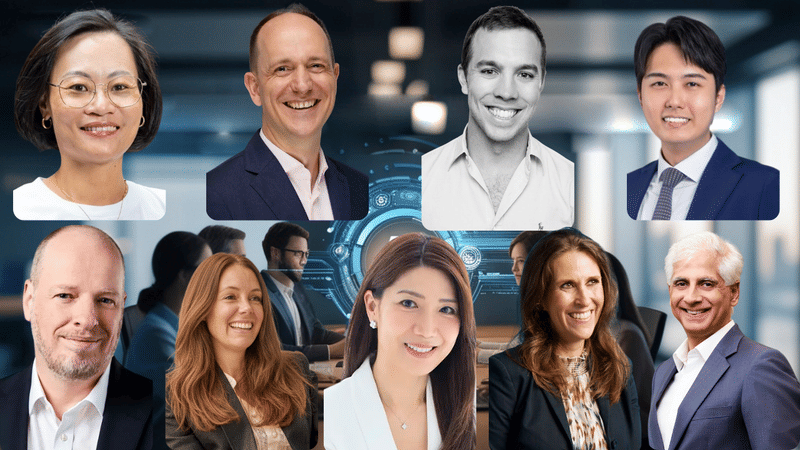
As the AI policy direction crystallises, industry leaders say execution, trust, and workforce readiness will determine whether the vision translates into real impact.
When Lawrence Wong unveiled Singapore Budget 2026, one theme stood unmistakably at the centre – artificial intelligence.
From a new National AI Council to sector-focused AI missions and the Champions of AI programme, the government has signalled a decisive push to embed AI deeply into the nation’s economic and workforce strategy.
“We will therefore establish a new national AI Council…to drive Singapore’s AI agenda,” PM Wong said, outlining plans to accelerate AI-led transformation across advanced manufacturing, connectivity and logistics, finance, and healthcare. The broader ambition is clear – “Singapore can become a trusted hub where companies and researchers come together to develop, test and deploy impactful AI solutions, and do so faster and more coherently than many larger countries.”
As the policy direction crystallises, industry leaders say execution, trust, and workforce readiness will determine whether the vision translates into real impact.
Trust will determine AI’s real scale
Raen Lim, APJ Managing Director at Qualtrics, welcomed the strong policy push but warned that adoption ultimately hinges on confidence.
“Budget 2026 is sending a clear yet familiar message: more AI adoption, more compute power, more upskilling… The harder question… is: who will trust it?” she said. “Without trust from customers and employees, AI won’t scale beyond pilots, and the returns on infrastructure and tooling will be capped."
Lim stressed that while expanded access to tools will help firms get started, the real bottleneck is trust among customers and employees. She pointed to synthetic data as a potential national enabler, provided quality and validation standards keep pace.
“If Singapore wants to be a ‘trusted AI hub’, the next step is to treat trust like national infrastructure… with measurable governance,” she added. “Setting Singapore’s trust framework into a regional benchmark, organisations can demonstrate that systems have met clear standards for transparency, data stewardship, safety testing and accountability. It would be a signal of proof that helps enterprises buy, deploy and scale AI with confidence across the region.”
AI push reflects long-term economic positioning
Zavier Wong, Market Analyst at eToro, described the Budget as structurally focused rather than stimulus-driven. “It’s clear that PM Wong wants Singapore to be an AI capital on the world stage,” he said, noting the 40% corporate income tax rebate for active companies that employ local workers (with a minimum payout of $1,500 and a cap of $30,000), targeted support for AI adoption and workforce transformation, and increased RIE investments.
According to Wong, the government is doubling down on areas where Singapore already has depth, particularly semiconductors and advanced technology, while using AI as part of a broader strategy to strengthen economic resilience. “PM Wong’s tone urged the need for economic resilience, but… he also sees present global volatility as an opportunity for Singapore to take significant strides forward,” he added.
Workforce transition support arrives at a critical moment
Karen Ng, Regional Head of Expansion – Enterprise – North and South Asia at Deel, said the timing of the reforms is significant. “It’s encouraging to see the government putting more emphasis on helping both businesses and workers make a smoother transition into an AI-enabled economy,” she noted.
Ng emphasised that companies must move beyond tool adoption toward role redesign. “For employers, the next step is… redesigning roles so junior staff spend less time on repetitive work and more on problem solving… For mid-career workers, the real unlock will be linking AI training to specific role changes and internal mobility,” she said.
Execution inside organisations will be the real test
Lim also highlighted that workforce transformation will require deeper operating model changes. “Upskilling is necessary, but training alone won’t move people through transitions,” she said. Employees must trust how AI affects workflows, performance assessment, and data use.
“Done well, AI becomes a force multiplier for people… rather than a source of anxiety,” she added, noting that Singapore’s competitive edge will come from exporting AI that people trust in practice.
Data foundations will separate winners from the rest
Megan Hughes, Managing Director & Vice President, JAPAC at HubSpot, said AI success depends heavily on internal data readiness. “One of the biggest challenges with AI today is that it generates outputs at lightning speed, but without context, those outputs rarely drive real business results,” she said.
Hughes believes programmes like Champions of AI can help close operational gaps such as data integration. “Competitive advantage… will be defined not just by speed, but by how effectively organisations embed AI into core operations,” she noted. “Leadership alignment and the ability to establish hybrid human-AI teams will matter more than technology selection.”
Singapore is institutionalising AI
Jornt Moerland, Senior Vice President APAC, Siemens Data & AI, described the Budget as a turning point. “Singapore is no longer observing the AI revolution but is institutionalising it,” he said.
Moerland welcomed redesigned SkillsFuture pathways, noting that broad AI literacy across technical and non-technical roles is essential to scaling impact. “This resonates with our belief that AI is a strategic imperative, requiring broad adoption to unlock its potential and scale,” he said.
“PM Wong’s vision for Singapore as a frontier technology launchpad, backed by a S$37 billion investment, is a critical inflection point. This commitment cements Singapore's status as a global testbed. We see this as a tremendous opportunity to collaborate, leveraging tech and domain expertise to translate research into enterprise-grade reality, ensuring ‘Made in Singapore’ technology signifies innovation and reliability,” he added.
SMEs and skills integration get a boost
Niko Walraven, Area VP – APAC at Neat, said the Budget confirms Singapore’s shift to an “AI-first” posture. “The establishment of the National AI Council and the S$1 billion injection into Startup SG Equity signal a clear commitment,” he said. ‘
Walraven highlighted the expanded Productivity Solutions Grant as particularly significant for SMEs, “this is a game-changer for SMEs because it simplifies the path to adopting zero-touch infrastructure.
While the merger of SkillsFuture and Workforce Singapore should better align skills with future jobs, adding, “equipping workers with these skills ensures that hybrid work doesn't lead to proximity bias, but rather to a more inclusive, equitable, and human-centric workspace where every voice at the table is heard clearly.”
From experimentation to systematic deployment
Andrew McCarthy, GM of ANZ, SEA and India at Notion, said the narrative has clearly evolved. “We’re no longer asking if AI works, we’re asking how to make it work systematically across every sector,” he said.
However, he flagged a key friction point: fragmented systems. “The issue isn’t AI capability, it’s increasing busywork due to fragmented systems,” McCarthy noted, urging organisations to consolidate knowledge into unified workspaces. “Budget 2026 provides the incentives, now businesses must use them strategically: consolidate fragmented systems into unified workspaces where AI has the context to actually finish work. Singapore has solved the "why"; connected AI-native platforms like Notion help organisations solve the "how
Human ingenuity becomes the true differentiator
Koren Wines, Managing Director at Xero Asia, said the Budget marks a maturity shift in Singapore’s AI journey. “The focus is no longer just on equipping the workforce with tools, but on building acumen to use AI meaningfully,” she said.
With most SMEs already digitally capable, she argued, competitive advantage will come from how creatively businesses apply AI. “expanding TeSA to provide AI training for non-tech roles acknowledges that AI mastery is now a core requirement for every professional, regardless of their industry”
“Singapore’s workforce can move beyond using AI just for simple automation and manual tasks, instead leveraging it for high-level strategic moves that drive real growth and propel Singapore’s economy forward,” Wines added.
Sectoral depth and talent pipelines matter
Haresh Khoobchandani, Vice President, APAC & Japan at Autodesk, welcomed the sector-specific AI missions. “For instance, industries like construction and manufacturing don’t just need general chatbots. They need high-level coordination and strategic direction and support that these new initiatives promise,” he said.
He also praised the six-month complimentary access to premium AI tools for trainees, calling it a practical answer to the risks of AI being a disruptor if talent development doesn't keep pace, and ensuring students enter the workforce as “practitioners of AI, not just observers.”
“more fluid collaboration between the public sector, private industry, and academic institutions is also essential to ensure Singapore’s workforce is able to pivot faster and more effectively to changing requirements in the AI era,” he added welcoming the merger of Workforce Singapore and SkillsFuture Singapore, “aligning skills training measures with real-world disruption to avoid the skills mismatch among local talents.”
The key takeaway is – Singapore’s AI push is being widely welcomed by industry, but leaders are clear-eyed about what comes next. The consensus is unmistakable:
Policy momentum is strong
Infrastructure support is expanding
But trust, data readiness, workforce redesign, and execution discipline will determine success
If Singapore can align these moving pieces, leaders believe the nation has a credible shot at becoming not just an AI adopter, but a global AI standard-setter.
Author
Loading...