








Leadership
How is AIA Singapore’s Owen Addison future-proofing its people and purpose?




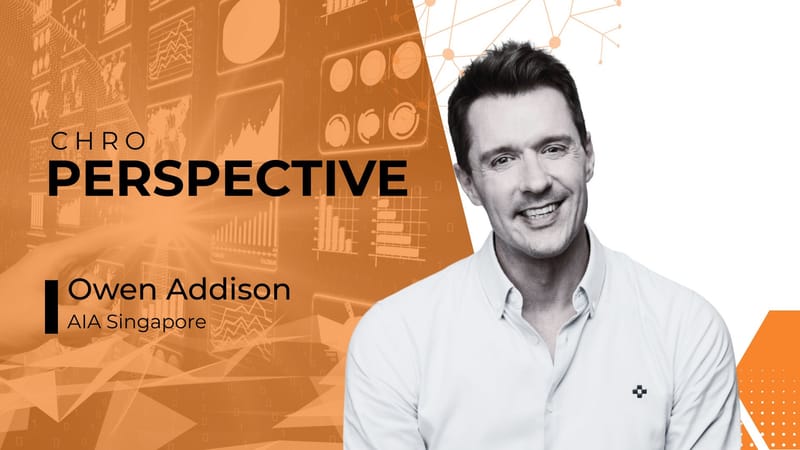
AIA Singapore CHRO Owen Addison on building a future-ready workforce through culture, skills and wellbeing in a fast-changing, AI-driven work environment.
As the world of work transforms at an unprecedented pace, the insurance and financial services sectors are navigating a perfect storm of economic uncertainty, technological disruption, and shifting employee expectations. At the heart of this dynamic landscape is Owen Addison, the newly appointed Chief Human Resources Officer at AIA Singapore, who brings a forward-thinking, people-first philosophy to one of the region’s leading insurers.
In this exclusive interview with People Matters Global, Addison shares his vision for building a resilient, future-ready workforce—one where culture, wellbeing, and continuous learning are not just buzzwords, but the very foundation of sustainable success. Drawing on his extensive experience and a deep belief in human-centric leadership, Addison addresses the critical challenges and opportunities facing HR leaders today: from harnessing the power of AI and fostering psychological safety, to reimagining talent development and embedding holistic wellbeing into every aspect of the employee experience.
With candid insights and actionable strategies, Addison offers a roadmap for organisations seeking to attract, develop, and retain top talent in an era defined by constant change.
Edited excerpts
Edited excerpts
Q. As you step into your new role at AIA Singapore, what are the most pressing HR challenges you see in maintaining a people-first approach amidst ongoing economic uncertainty and evolving work models?
Over the past year, volatility has continued to define the insurance and financial services landscape. Technological advancements, evolving customer expectations, and ever-shifting regulatory requirements are constantly challenging organisations to balance business performance with employee development and talent retention.
At the same time, employees’ expectations of workplace support have expanded – learning, growth and wellbeing are increasingly intertwined. Without this holistic support, capability gaps quickly translate into business risks, impacting productivity, retention, and the organisation’s overall resilience.
Stepping into this role, I see three key priorities in sustaining our people-first approach.
• Nurturing our AIA culture: First, we must continue to nurture and protect our culture and the way we work. Culture connects our people to our shared purpose and guides how we work together, regardless of role or team. In periods of uncertainty, culture becomes an even stronger anchor. By reinforcing belonging, fairness and thoughtful people leadership, we’re able to maintain trust and alignment across the entire organisation, ensuring our AIA team feels supported regardless of external conditions.
• Future-proofing our workforce: Second, we must continue equipping our workforce for the future of work. This means investing in the skills, mindsets and confidence our people need to navigate change, while also empowering managers with the clarity, tools and judgement required to lead teams effectively in evolving work environments.
• Championing holistic wellbeing: Finally, embedding wellbeing into the everyday employee experience will remain a key lever in maintaining our people-first approach. Rather than treating wellbeing as a standalone initiative, we are integrating it into the everyday employee experience.
To truly thrive at work, employees need more than just the right tools and skills—they need to feel supported across all aspects of their wellbeing. At AIA Singapore, we believe that by supporting mental, physical, emotional, and social well-being, we create an environment where employees can bring their best selves to work and continue to do their best work.
Q. What is your outlook on how the HR industry is transforming, and the key shifts defining the future of work, including the battle for talent and the critical focus on employee wellbeing?
The HR function itself is transforming into a more strategic, AI-enabled and systems-thinking partner to the business. Technology is creating new opportunities for HR to shape how work gets done, build more adaptive talent systems, elevate the overall human experience at work, and enable business growth.
However, the real opportunity lies in how thoughtfully and responsibly HR can guide organisations through this technological and business transformation while retaining a relentless focus on employee-centricity. Employee-centric change management is critical to the successful adoption of new technologies, and requires targeted communication, workforce segmentation and ongoing engagement to ensure alignment across the entire organisation.
Ultimately, the role of HR is becoming more strategic. The most successful organisations will be those that can stay business-focused while ensuring their people feel supported, valued, and empowered to grow even in uncertain times.
Several key shifts are defining the future of work. Work is becoming increasingly skills-centred, with employees placing greater value on continuous learning, adaptability and meaningful career progression.
At the same time, rapid technological advancements, including AI, are reshaping workflows, making human-centred leadership, empathy and employee wellbeing more important than ever.
Ultimately, organisations that can provide clarity, meaningful development opportunities and genuine connection will be best positioned to attract, develop and retain talent in an increasingly competitive landscape.
Q. What, according to you, has been the impact of AI on the entry and mid-career workforce within the insurance sector?
AI helps simplify and enhance many operational processes across the insurance sector, allowing employees to dedicate more time to higher-value capabilities such as quality advisory work, critical thinking, human-centred design, and relationship-building.
For early-career professionals, the most important capability is to develop confidence in working alongside digital tools at the very start of their careers. This includes understanding how to use AI as a productivity enabler, while also recognising where human insight, judgement and creativity add unique value.
For mid-career talent, staying open to continuous learning, reskilling and upskilling will be critical. Many already have deep industry expertise and skills, and AI creates opportunities to further deepen that expertise while expanding into more strategic and advisory roles.
With the right training and responsible adoption, AI can be an enabler of growth rather than a replacement for people.
Q. You’ve emphasised the importance of listening as a core HR competency. Can you share a recent example where active listening led to a meaningful change or initiative at AIA Singapore?
Ever since I’ve stepped into this role at AIA Singapore, I’ve treated active listening as the foundation of my leadership.
Through small-group discussions, informal check-ins, and business immersion sessions, colleagues have shared valuable perspectives on how we can strengthen how we work. These insights include: improving the rhythm and clarity of meetings, providing better support for managers, and making wellbeing resources easier to access.
Guided by these insights, we will look to pilot several practical enhancements. These include clearer ways of working to improve focus, refreshed development programmes aligned with today’s evolving work environment, and more intuitive and accessible points of wellbeing support.
These are just early initiatives, and over time I aim to build on these enhancements and further strengthen the employee experience through both small, team-level improvements and larger organisation-wide initiatives.
One thing I believe strongly in is that listening is not a one-off exercise, but an ongoing commitment. Guided by our people-first philosophy, this dedication to active listening is shared across our entire management team—we collectively strive to stay closely connected to how our teams are feeling and what they need, regularly gathering feedback that informs our priorities and shapes our people agenda
Q. Given the current climate of layoffs and talent shortages, how is AIA Singapore reimagining its approach to attracting, developing, and retaining top talent in the highly competitive financial services sector?
In a competitive job market, we recognise that people are looking for organisations that invest in their growth and give them a clear sense of purpose and contribution. That’s why we’re consistently sharpening our employee value proposition by placing career development, meaningful work, and an inclusive, supportive culture at the centre of our approach to attracting and retaining talent.
Amid economic uncertainty and rapid disruption, a key focus for us is building capability from within. As we continue to strengthen our development pathways and expand coaching and mentorship opportunities, this not only deepens our internal talent pipeline but also reinforces a culture of mobility, learning and opportunity across the organisation.
At the same time, we are continuing to evolve our holistic wellbeing ecosystem to support employees across all dimensions of wellbeing, including physical, mental, social, and financial. Retaining talent starts with creating an environment where people feel inspired to bring their best selves to work every day. By embedding wellbeing into the everyday employee experience, we’re cultivating a workplace where people can thrive and feel confident in building sustainable careers with us.
For example, under our Workwell with AIA proposition, we’ve hosted complimentary health screenings for all employees and organised wellness fairs to educate them on the different ways they can achieve holistic wellness. In addition, our staff have access to the complimentary AIA Vitality programme, empowering them with resources and incentives to proactively manage their health and wellbeing.
Q. With rapidly changing skill requirements, how is AIA Singapore building a skills-first organisation to ensure workforce agility and long-term business sustainability?
As skill requirements continue to evolve rapidly, we are focused on building AIA Singapore into a true skills-first organisation to strengthen organisational resilience and enable sustained business growth.
Firstly, we are strengthening our skills-based frameworks to better identify the capabilities needed for both today’s roles and future opportunities. This provides employees with greater visibility and confidence in their ability to grow with the organisation, while enabling us to plan our workforce needs with a long-term perspective.
To bring this to life, we are expanding accessible, multi-format learning opportunities, from structured training programmes to on-the-job experiences and cross-functional projects. Our aim is to build skills development into the everyday rhythm of work, rather than something confined to the classroom.
Additionally, instead of relying on constant rehiring, at AIA Singapore, we’ve invested in key initiatives to enhance organisational-wide capabilities, close skill gaps, and build resilience, future-readiness, and long-term sustainability.
One key area of investment is AI upskilling. Recognising the transformative impact of AI on the insurance industry, we have taken a first step to invest in capability-building by upskilling our employees, equipping them with related skills and helping them embrace these advancements as opportunities for growth rather than disruptive threats. To support this, we are embedding practical AI tools into everyday workflows to help employees experience the value of technology firsthand and reduce anxiety around change.
Equally important to these initiatives is creating a culture where employees feel safe, supported and confident to take advantage of these opportunities. We are focused on fostering an environment where employees feel empowered to continuously upskill, experiment and take ownership of their career progression. By creating the right environment and providing access to the necessary tools and support, we help our people stay motivated to continuously learn – ensuring both our people and our organisation remain agile, adaptable and future-ready.
Q. How does AIA Singapore measure the success of its people-first philosophy, and what metrics or feedback mechanisms are in place to ensure continuous improvement in employee experience?
We take a balanced, multi-dimensional approach to measuring our employee experience, looking across employee sentiment, development opportunities, well-being indicators and broader organisational health. This gives us a holistic view of how our people are experiencing work and where we should focus our attention.
Above all, we operate with a continuous improvement mindset. As the economic climate and workplace expectations evolve, we recognise that employee needs evolve as well — and so should our employee experience. Our goal is to evolve our people agenda thoughtfully, transparently and responsibly over time, using real data and real feedback to guide decisions. This helps ensure that our employee experience remains relevant, responsive and aligned with the needs of a changing workforce.
We stay close to our employees' lived experiences through multiple feedback channels, including pulse surveys, listening sessions, and regular manager check-ins. These on-the-ground insights and perspectives are critical in helping us better understand our people’s needs and shaping and refining our people strategy, ensuring our initiatives remain grounded in what truly matters to our teams.
Q. Looking ahead, what emerging HR trends do you believe will most significantly shape the future of work in the financial services sector, and how is AIA Singapore preparing to stay ahead of these shifts?
Looking ahead, AI, automation and advanced analytics will become increasingly embedded in how we work and reshape ways of working across the financial services sector. As organisations adopt these changes, it will be essential to ensure employees feel supported, equipped and confident as new tools and ways of working emerge.
At the same time, we’re seeing demand for specialised capabilities intensify, particularly in data, information security, digital operations, and human-centred leadership. Organisations that can articulate a clear skills strategy and create an environment that encourages and rewards continuous learning will be best positioned to attract, develop, and retain talent.
At AIA Singapore, we are taking a proactive approach to both shifts by championing a culture of continuous learning and adaptability. Change is inevitable, and with advancements such as AI and automation, it is happening faster and on a greater scale.
This story is part of CHRO Perspective. A People Matters series featuring bold ideas and real-world insights from India’s top CHROs. Stay with us for more perspectives that power the future of work.
Author
Loading...