








Leadership
Why HR needs better systems, not just better tools: Lessons from the HR OS hackathon
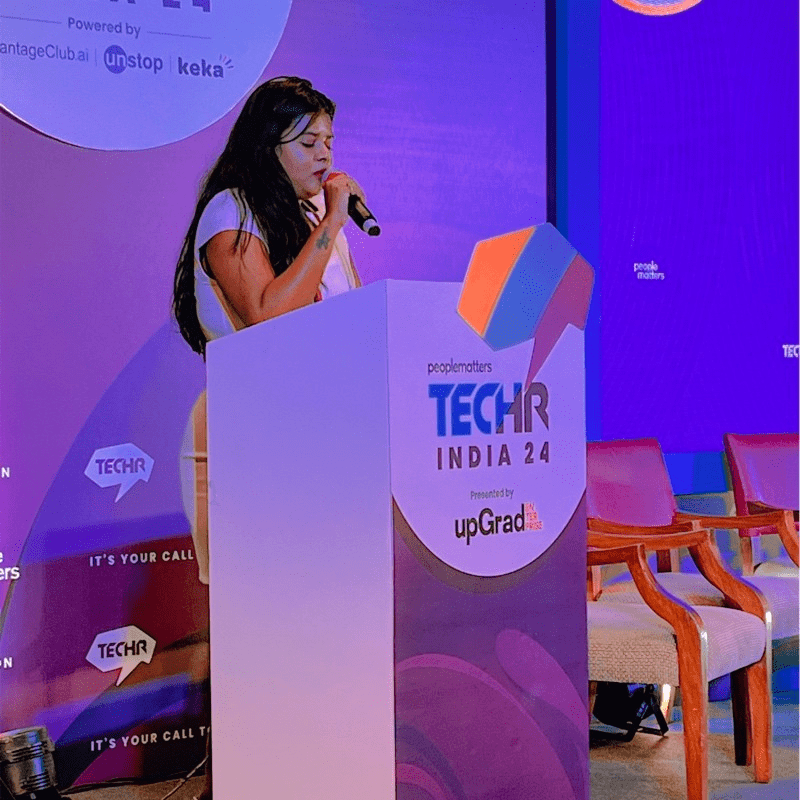





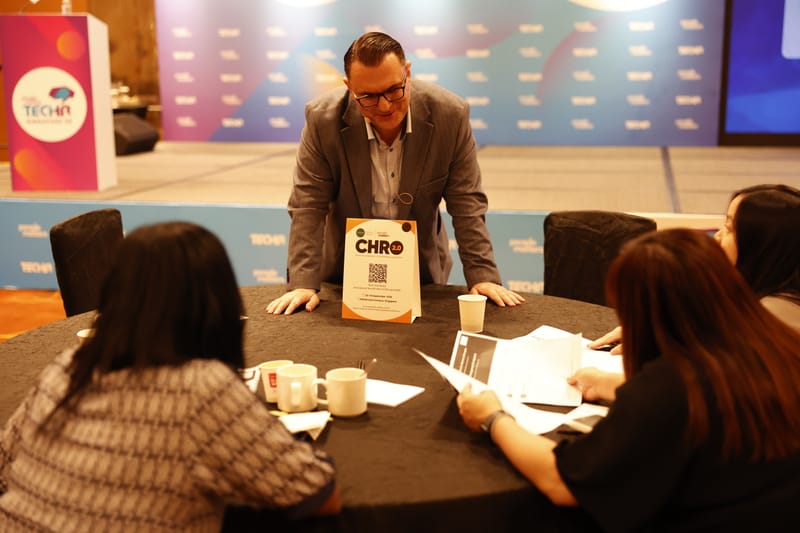
At TechHR Singapore 2026, HR leaders moved beyond theory to redesign broken processes, showing why systems thinking—not tools—will define the function’s future.
Most conversations around HR transformation tend to stay comfortably theoretical.
At TechHR Singapore 2026, this session chose a different route. In a high-energy masterclass led by Jovan Trajceski of BrightPath Holdings, participants were asked to do something deceptively simple: take a broken HR process and fix it—live.
The format was part workshop, part pressure test. Teams had limited time to dissect workflows, identify friction points, rebuild processes using systems thinking, and layer in automation and AI where relevant.
The objective was not discussion. It was execution.
LOGIC BEFORE TECHNOLOGY
If there was one idea that anchored the session, it was this: technology cannot fix a poorly designed process.
“The point today was essentially redesign the logic first, then the tools. Do not start with the tools,” Trajceski said.
It is a line that cuts through much of the current HR tech narrative.
Across organisations, transformation efforts often begin with platform investments—AI tools, automation systems, digital dashboards—without first interrogating whether the underlying workflow makes sense.
The hackathon inverted that sequence.
“If the logic doesn’t work, spend time with your team to redesign it. That’s the baseline,” he added.
Only after that, participants were told, should technology enter the conversation—and even then, selectively.
“Use AI when it makes sense… the goal is not to overly leverage it,” he noted.
REBUILDING THE HIRING EXPERIENCE
One group turned its attention to recruitment and onboarding—arguably one of the most operationally heavy areas in HR.
The redesign focused on collapsing timelines and improving experience through automation.
Participants described a model where candidate shortlisting, offer generation, and onboarding workflows were seamlessly connected. Offers could be triggered automatically, while onboarding processes—from assigning laptops to scheduling training—could begin even before the employee’s first day.
“You can automate the entire pre-onboarding to onboarding… assign them a laptop, a welcome email, even a personal training… before they come to your work,” one participant explained.
The goal was not just efficiency. It was continuity—removing friction from the candidate-to-employee transition and shaping a more coherent experience.
THE INTERNAL MOBILITY BLIND SPOT
If hiring is visible, internal mobility remains less so—and, as the session revealed, less effective.
Another group focused on mobility and reskilling, highlighting a persistent challenge: employees often do not know what opportunities exist within their own organisations.
“I wouldn’t know as an employee what’s an open role in my next department… or how do I even navigate,” a participant said.
The absence of visibility, they noted, is not a minor inconvenience. It directly influences retention.
“This might be tied to possible attrition… if I don’t get the opportunity here in my organisation,” the same participant added.
The friction points were clear:
- Limited visibility of roles
- Lack of structured internal pathways
- No system to enable movement
FROM PROCESS TO SYSTEM
The solutions proposed pointed towards a broader shift—from isolated process fixes to integrated systems.
Participants suggested building:
- Skill repositories that map employee capabilities beyond static resumes
- Internal marketplaces that mirror external job boards
- Dynamic employee profiles capturing experience, projects, and aspirations
“We should have internal marketplace… like we have a job board outside,” one participant said.
The emphasis was not on introducing new tools, but on connecting existing elements into a system that enables visibility, movement, and decision-making.
Trajceski pushed this further, asking organisations to examine their understanding of talent itself.
“Do you guys have a clear view of your top talent… do they know what skills are missing?” he asked.
Without that clarity, even well-designed systems risk falling short.
THE REAL CONSTRAINT: DESIGN, NOT CAPABILITY
Across use cases, a consistent pattern emerged.
The barriers were not technological. They were structural.
Organisations have access to tools. What they often lack is a coherent design logic that ties processes together.
The hackathon format made this visible in real time. By forcing teams to rebuild workflows from scratch, it exposed gaps that incremental improvements tend to overlook.
It also reframed the role of HR.
No longer just a function that manages processes, HR is increasingly expected to design systems—systems that balance efficiency, intelligence, and human experience.
WHAT COMES NEXT
The session closed not with a summary, but with a challenge.
“What is one process we can improve in the next 30 days?” Trajceski asked.
It is a deceptively simple question—one that shifts transformation from strategy to action.
In an environment where HR agendas are often stretched across long timelines, the emphasis here was on immediacy: start small, test quickly, and build momentum.
A SHIFT IN HOW HR OPERATES
As TechHR Singapore 2026 continues to explore the intersection of technology, talent, and leadership, this session offered a grounded counterpoint.
While much of the conversation focuses on what technology can enable, the hackathon highlighted something more fundamental: what organisations choose to design.
The distinction matters.
Because the future of HR may not be determined by the tools it adopts—but by the systems it builds around them.
Topics
Author
Loading...