








Skilling
Singapore Budget 2026: Tech leaders weigh in on AI execution, talent readiness and cost pressures



 ||
||

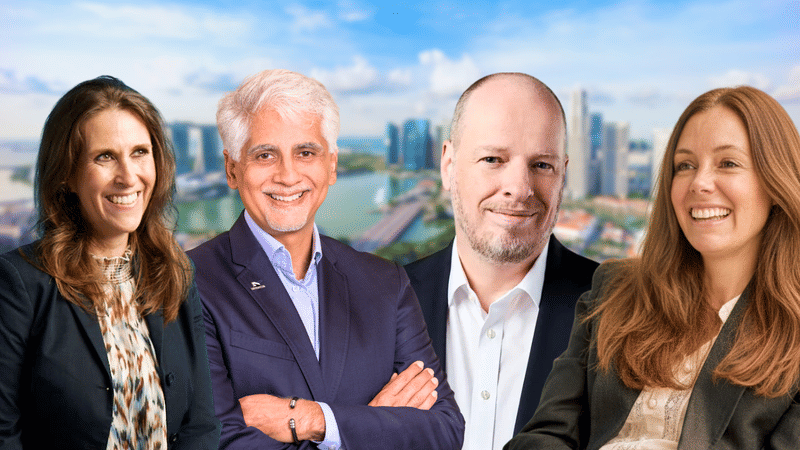
As AI embeds into daily work and hybrid models take hold, leaders say competitiveness will hinge on execution, skills readiness and system simplicity, with Budget 2026 seen as a chance to help businesses turn ambition into real-world impact.
As Singapore approaches Budget 2026, businesses are looking beyond headline incentives and asking a more fundamental question – how can technology investments translate into real productivity, competitiveness and sustainable growth?
Across key industries, tech leaders say the challenge is no longer access to digital tools, but knowing how to deploy them meaningfully, securely and at scale, while ensuring talent keeps pace with rapid change.
While government initiatives such as SkillsFuture and enterprise digital grants have laid strong foundations, leaders say the next phase of policy support must focus on execution, integration and people.
From AI access to industry-specific impact
Haresh Khoobchandani, Vice President, APAC & Japan at Autodesk, said Singapore has reached an inflection point in its AI journey.
“Through programmes like SkillsFuture and the Enterprise Compute Initiative, the government has done the heavy lifting of making AI accessible to businesses of all sizes,” Khoobchandani said. “But merely having AI tools isn’t the same as knowing how to use them for complex, industry-specific tasks.”
Khoobchandani believes Budget 2026 is an opportunity to move beyond foundational adoption towards targeted, sectoral AI support, particularly for Design & Make industries such as construction, manufacturing and media.
“These industries don’t just need general chatbots,” he noted. “They need AI that helps site managers forecast safety risks, enables designers to automate mundane work so they can focus on innovation, and supports the shift towards sustainable manufacturing.”
“Long-term success also hinges on people. The skills mismatch we saw in 2025 among fresh graduates was a good wake-up call on the risks of AI being a disruptor if talent development doesn't keep pace,” he added.
Such use cases, he said, require more than generic AI enablement, they demand domain-specific deployment, data readiness and skilled practitioners.
“We need tighter, more fluid collaboration between the public sector, private industry, and academic institutions to build curricula around real-world AI use cases. This provides students with relevant hands-on experience that equips them with the skills to enter the workforce as adept practitioners of AI, not just observers. This ensures Singapore’s next generation of talent won’t just be AI-literate, but AI-essential.”
Governance, trust and the SME data gap
As businesses move from AI experimentation to deployment, governance and trust are becoming central concerns. Megan Hughes, Managing Director and Vice President, JAPAC at HubSpot, said Singapore’s new Model AI Governance Framework for Agentic AI comes at a critical moment, particularly as “AI agents become more capable of autonomous decision-making, strong governance frameworks are crucial for consumer trust and data safety,” she asserted.
“Strong governance frameworks are essential for consumer trust and data safety,” she said. “But for them to work in practice, businesses need the right foundations internally.”
“In Singapore, AI adoption isn’t being slowed by lack of ambition, but by security and privacy concerns.” She added that according to HubSpot’s 2025 Singapore State of Business Growth Report, nearly four in ten local businesses say security and privacy concerns are holding them back from realising AI’s full value.
Hughes pointed to fragmented data systems as a key barrier, especially for SMEs. “A unified and reliable data foundation, combined with strong security and internal governance, is what allows AI systems to deliver outcomes businesses can stand behind,” she said. She hopes Budget 2026 will include targeted support to help SMEs build integrated data ecosystems, enabling them to adopt AI with greater confidence and clearer returns.
Looking ahead, Hughes added that Singapore’s competitive advantage will increasingly depend on organisational speed and adaptability, rather than tool sophistication alone.
“Leadership alignment and hybrid human-AI teams will matter more than technology selection alone,” she said. “Accessible training programmes that equip business leaders to build hybrid teams where AI handles routine work and people focus on strategy, creativity, and relationships would be an investment in local businesses’ future success,”
Tackling tech bloat and hybrid work friction
For many organisations, the issue is not a lack of technology, but too much of it.
“As Singapore's economy navigates a new landscape defined by labour constraints and rapid digitisation, Budget 2026 represents a pivotal moment to help businesses move beyond adopting technology to making it work for them,” shared Niko Walraven, Area Vice President, APAC at Neat.
Adding that while AI adoption in Singapore is high, at 83% among local businesses, many firms are now grappling with “tech bloat”.
“Fragmented systems are draining nearly 4.5 hours of productivity per employee every week,” he said. “What’s needed now is a shift from adoption to AI orchestration.”
Walraven hopes Budget 2026 will evolve schemes such as the Productivity Solutions Grant (PSG) to prioritise management simplicity, incentivising integrated, "zero-touch" infrastructure that automates the friction out of daily operations, and reduces IT overhead for SMEs and delivers measurable productivity gains.”
He also highlighted emerging cultural and operational challenges linked to hybrid work. “As the Tripartite Guidelines on Flexible Work Arrangement (FWA) requests take hold, a "presence gap" is emerging – proximity bias and inadequate hybrid setups are slowing decision-making and fragmenting team culture.”
“Workforce transformation programmes that focus on collaboration equity would help ensure every employee has an equal voice, regardless of where they work,” he said, adding that, “If Budget 2026 aims to build a more inclusive society, equipping businesses with the right tools to create seamless, human-centric workspaces will be essential. True economic resilience in the "intelligent age" will depend on how effectively we close these gaps to create a seamless, human-centric workspace for all.”
Building “intelligent SMEs” through invisible AI and human skills
From an SME perspective, the conversation is shifting from digital adoption to intentional application.
Koren Wines, Managing Director at Xero Asia, said years of government support have made Singapore’s SMEs among the most digitally savvy globally. The next step with Budget 2026, she said, is helping them evolve into “intelligent SMEs”.
“This isn’t about owning more tools,” she said. “It’s about how businesses intentionally apply technology to drive productivity and sustainable growth.”
Wines pointed to the rise of “invisible AI”, wherein “AI is embedded directly into the digital tools SMEs already use every day, from accounting and messaging platforms to productivity and collaboration software.”
And as access becomes ubiquitous, “what matters now is how people apply it. As AI becomes part of the background, human expertise, judgment and meaningful customer engagement are what create real value.” Wines added.
“When routine tasks like reconciliations, reporting and forecasting are automated, time is freed up for higher-value work, navigating complex client conversations, making confident decisions and solving problems creatively,” she said.
From a Budget perspective, Wines believes this reinforces the need to invest in real AI fluency, not just adoption. SMEs, She said, need practical training that helps teams work effectively alongside AI, understand where human oversight matters, and strengthen capabilities such as communication, problem-solving and leadership.
She also emphasised the importance of security by design, urging SMEs to move away from reactive, do-it-yourself approaches. “Choosing tools with enterprise-grade security built in allows businesses to focus on growth with confidence, rather than constantly responding to threats,” Wines said.
A Budget moment focused on execution
Collectively, these tech leaders say that while Singapore has built strong digital foundations, the next phase will be defined by how effectively technology, talent and policy align in practice.
As AI becomes embedded across workflows and hybrid work becomes the norm, they believe future competitiveness will hinge on execution, closing skills gaps, simplifying systems, strengthening trust, and enabling businesses to move faster with confidence.
For many, Budget 2026, to be announced on February 12, represents an opportunity to reinforce Singapore’s position not just as a digitally advanced economy, but as one where businesses are equipped to turn innovation into real-world impact.
Author
Loading...