








Economy Policy
AI, deglobalisation, ageing workforce, and geopolitics to reshape jobs and growth in Singapore






To address these risks, Ng stressed the need for a fair and just transition that cushions workers during periods of change, prevents inequalities from widening, and ensures workers’ voices continue to shape national outcomes.
Artificial intelligence, de-globalisation and rising geopolitical tensions are converging to reshape jobs, economic growth and social cohesion in Singapore, National Trades Union Congress (NTUC) Secretary-General Ng Chee Meng warned, calling for a calibrated national response anchored in a “fair and just transition” for workers.
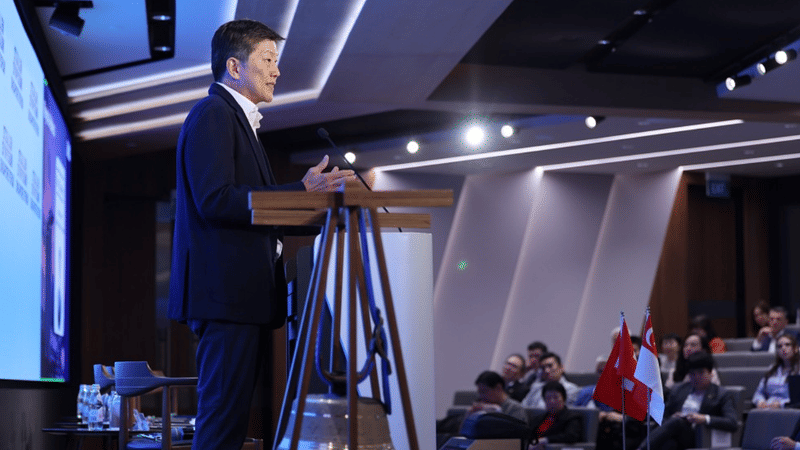
Speaking at the 10th St Gallen Symposium Singapore Forum on January 22, Ng said the nature of work and economic growth is being fundamentally altered by global disruptions, and Singapore must adapt swiftly while ensuring workers are not left behind.
“Since we live in this world, we might as well embrace the disruption. Look upon the opportunities and seize those opportunities,” Ng said.
Four forces reshaping the economy
Ng outlined four major disruptive forces confronting Singapore: geopolitical instability, a shift from globalisation to deglobalisation, rapid technological change, and demographic shifts.
He described geopolitical instability as the defining challenge of the current era, warning that the post-Second World War global order is under severe strain.
“The international order has shifted from peace to pieces. It is a rupture, not a transition,” Ng said, echoing remarks made by Canadian Prime Minister Mark Carney at the World Economic Forum 2026.
According to Ng, intensifying strategic competition among major powers is fragmenting the global landscape, making diplomacy, strong international partnerships and a credible defence posture critical for Singapore.
Closely linked to geopolitics is the shift towards deglobalisation. While the global economy has so far remained resilient, Ng cautioned that the longer-term impact of economic fragmentation cannot be ignored.
“This fundamental shift won’t go away anytime soon,” he said.
AI as opportunity.. and disruption
On technology, Ng said artificial intelligence is emerging as a general-purpose technology, comparable to electricity or computing, with the potential to transform every sector of the economy.
While AI adoption can significantly raise productivity and create sustainable jobs, he warned it will also disrupt knowledge-based professions such as law, accountancy and medicine.
“On one hand, you will have great possibilities. On the other, potential disruption,” he said.
Ng urged businesses to accelerate AI and technology adoption to stay competitive, but stressed that change must be managed responsibly.
Ageing workforce adds pressure
Demographic change is compounding these challenges, Ng noted, pointing to Singapore’s rapidly ageing population. By 2030, one in four Singaporeans will be aged 65 or older, requiring the economy to adapt quickly to support an older workforce while sustaining growth.
Implications for Singapore
Ng said the convergence of these disruptions has three major implications for Singapore.
- First, it raises questions about how the country safeguards its national security and diplomatic space in an increasingly unstable world.
- Second, Singapore must ensure it remains economically relevant amid shifting trade patterns and rapid technological change
- Third, poorly managed disruption could strain social cohesion, widening inequality and deepening societal divides.
To address these risks, Ng stressed the need for a fair and just transition that cushions workers during periods of change, prevents inequalities from widening, and ensures workers’ voices continue to shape national outcomes.
People-first approach to AI
Singapore has already emerged as one of the leading countries in workplace AI adoption. According to an Indeed Hiring Lab report, job advertisements mentioning generative AI have increased 1.7 times in recent years.
Prime Minister Lawrence Wong has previously acknowledged the disruptive potential of AI, pledging a people-first approach to its adoption.
“Even as we embrace AI and technology, we will not lose sight of our key priority,” Wong said during his National Day Rally speech last year. “Singaporeans will always be at the centre of everything we do.”
Ng echoed this sentiment, saying Singapore’s path forward must balance geopolitical realism, economic agility and social responsibility to ensure growth remains inclusive in an era of global uncertainty.
Author
Loading...