








Economy Policy
Malaysia losing RM379 billion annually to unpaid caregiving work, Minister warns






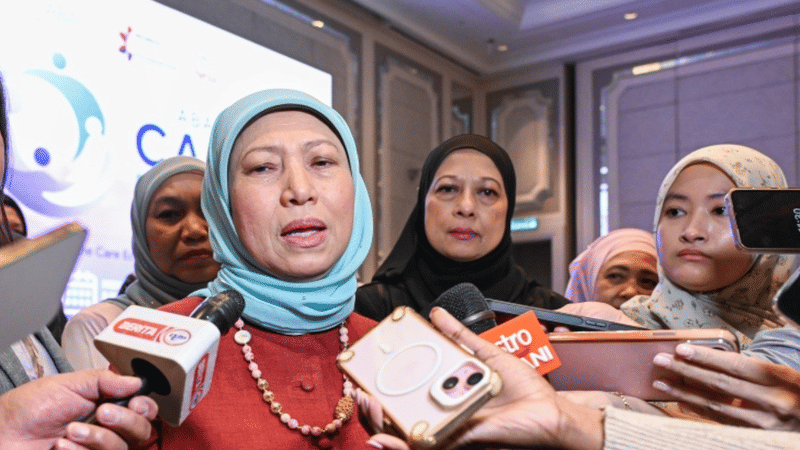
Minister Nancy Shukri said around 3.2 million Malaysians, mostly women, remain unable to fully participate in the workforce due to caregiving responsibilities.
Malaysia is losing billions of ringgit annually due to unpaid caregiving and domestic responsibilities that continue to fall largely on women, prompting renewed calls for stronger investment in the country's care economy.
Speaking at the APEC Business Advisory Council’s Malaysia Care Economy Roundtable 2026, Women, Family and Community Development Minister Datuk Seri Nancy Shukri said expanding care infrastructure has become an economic necessity rather than merely a social responsibility.
“While unpaid care and domestic work has historically remained under-recognised within conventional economic measurements, its implications for labour participation, productivity and economic resilience are becoming increasingly difficult to ignore,” Nancy said.
She cited a 2024 study by the Institute of Strategic and International Studies (ISIS) Malaysia, which estimated the value of unpaid care and domestic work at RM379 billion annually. Despite its significant contribution, around 3.2 million Malaysians, mostly women, remain unable to fully participate in the workforce due to caregiving responsibilities.
“That is why we must expand the care ecosystem, so families can contribute fully to the nation’s growth,” she said.
According to Nancy, improving access to reliable and affordable care services could add RM77 billion annually to Malaysia’s economy, equivalent to roughly 5% of the country's gross domestic product (GDP).
She stressed that building a stronger care economy requires more than expanding services. It also demands professionalising the sector through workforce accreditation, career development pathways, and talent strategies that position caregiving as a skilled and sustainable profession.
“Greater emphasis will need to be placed on workforce professionalisation, accreditation, career pathways and talent development capable of attracting and retaining future generations of care workers,” she said.
The Minister also revealed that the government is expected to introduce National Care Standards for older persons and persons with disabilities as early as October. Backed by the Finance Ministry and Economy Ministry, the standards will establish minimum benchmarks for quality, safety and accountability across institutional, community-based and home care services.
“These are standards setting minimum benchmarks to ensure quality, safety and accountability in care services,” she said.
The proposed framework aims to safeguard the dignity and rights of care recipients while creating greater consistency across Malaysia’s care sector.
Discussions during the roundtable also highlighted persistent workforce challenges, including women leaving employment as caregiving responsibilities increase with larger families. Participants underscored the need for stronger childcare infrastructure and a larger pool of trained formal caregivers to support workforce participation and economic growth.
The Minister also highlighted Malaysia's changing demographics, noting that the country's fertility rate has declined from 6.0 births per woman in 1960 to about 1.6 today, below the replacement level. She said the Malaysia Care Strategic Framework and Action Plan 2026-2030 would provide a more structured and coordinated roadmap for strengthening the nation's care ecosystem amid growing care demands.
The remarks come as policymakers increasingly view the care economy as a critical lever for boosting labour force participation, advancing gender equality and strengthening long-term economic resilience.
Topics
Author
Loading...