








Economy Policy
Singapore Manpower Ministry rules out remote work push amid petrol price surge






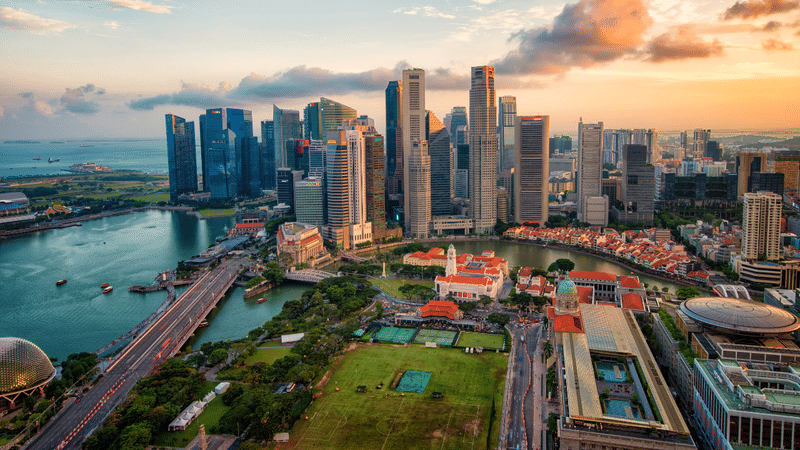
The ministry said it has no plans to promote remote work amid petrol price surges, stressing that such policies are long-term workforce reforms, not short-term responses.
Singapore has ruled out introducing remote work measures in response to rising fuel costs, emphasizing that such arrangements remain a long-term workforce strategy rather than a short-term economic intervention.
In a written reply to a Parliamentary Question on April 8, 2026, the Ministry of Manpower Singapore (MOM) stated that it has no plans to temporarily encourage remote work to offset the impact of surging petrol prices triggered by geopolitical tensions in the Middle East.
The query, raised by Foo Cexiang, sought clarity on whether the Government would consider promoting remote work for non-essential services to reduce transportation usage amid escalating fuel costs.
In its response, MOM noted that the Government had already addressed concerns surrounding fuel price volatility in ministerial statements delivered on April 7, 2026. The ministry added that there are currently no plans to implement remote work policies specifically in response to petrol price surges.
“The Government has elaborated on the fuel situation in the Ministerial Statements on 7 April 2026. We currently do not have plans to encourage remote work specifically in response to petrol price surges,” the ministry said.
Singapore has been a strong proponent of flexible work arrangements in recent years, encouraging employers to adopt hybrid and remote work practices to enhance workforce resilience, productivity, and employee well-being. However, the Government’s stance underscores that such policies are designed as structural workforce reforms rather than reactive measures to short-term economic fluctuations.
In an earlier response on April 7, the Ministry of Manpower Singapore said, “we currently have no plans to direct businesses to review work-from-home requirements.”
The decision also reflects Singapore’s balanced approach to managing external shocks, focusing on targeted economic strategies while allowing businesses the flexibility to determine operational arrangements that best suit their needs.
The response comes amid continued global uncertainty driven by geopolitical developments, highlighting the city-state’s commitment to stability and measured policymaking in navigating evolving economic pressures.
In contrast, several countries across Asia have turned to flexible and remote work arrangements to mitigate the impact of soaring fuel prices. In the Philippines, the Department of Labor and Employment (DOLE) has encouraged private employers to adopt measures such as compressed workweeks, hybrid setups, and telecommuting to conserve energy and manage rising operational costs, following directives from Ferdinand R. Marcos Jr..
Meanwhile, Indonesia is considering a nationwide work-from-home policy to curb fuel consumption, with Energy and Mineral Resources Minister Bahlil Lahadalia describing remote work as a pragmatic demand-side solution.
Similarly, Malaysia has taken decisive action, directing government employees to work remotely beginning April 15, as announced by Prime Minister Anwar Ibrahim, in a bid to reduce fuel usage and cushion the economy against the global energy crisis.
Topics
Author
Loading...