








Economy Policy
Singapore’s record-low birth rate puts workforce sustainability in focus: Deputy PM Gan Kim Yong






For employers, this means that workplace flexibility and parental support are no longer peripheral benefits but central to national workforce strategy.
Singapore’s historic low birth rate has thrust workforce sustainability and long-term population resilience to the forefront of national debate, as leaders laid out a series of policy recalibrations during the Committee of Supply 2026 discussions.
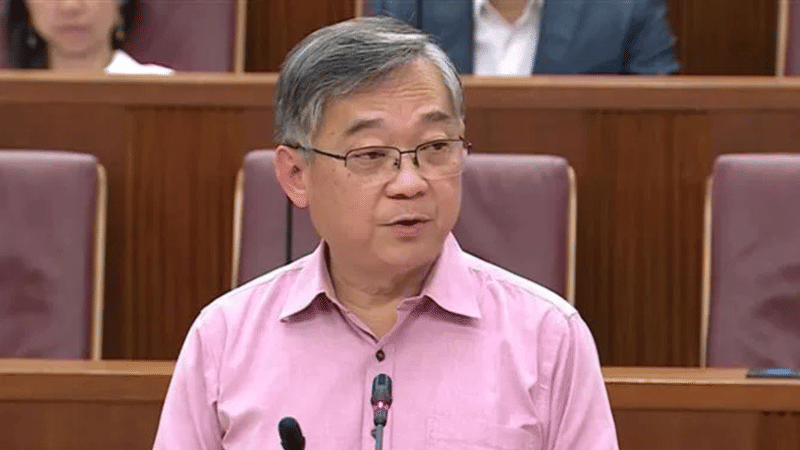
Speaking in Parliament, Deputy Prime Minister Gan Kim Yong described the city-state’s demographic outlook as one of the most pressing challenges facing its future.
Singapore recorded around 27,500 resident births last year – the lowest in its history – bringing the preliminary resident total fertility rate (TFR) for 2025 to 0.87. This marks a sharp decline from 0.97 in 2024 and 1.24 a decade ago.
“Low birth rates and an ageing population will profoundly reshape our nation, our society and our economy in the years ahead,” he said.
With a shrinking working-age population supporting a rapidly expanding elderly cohort, economic and social pressures are intensifying. Even with immigration, citizen population growth has slowed from an average of 0.9% per year between 2015 and 2020 to 0.7% last year. Without intervention, population contraction could begin as early as the 2040s.
Balancing family support and immigration
DPM Gan outlined a dual-track strategy: strengthen support for Singaporeans to form families while carefully managing immigration to maintain a stable citizen core.
On the workforce front, foreign manpower remains critical in sectors ranging from construction to maintenance, particularly as local workforce growth slows. Adjustments to Employment Pass and S Pass salary thresholds, alongside the Complementarity Assessment Framework, are designed to ensure foreign professionals complement rather than displace local talent.
At the same time, pathways to permanent residency and citizenship will continue to prioritise integration and long-term contribution to society.
A reset on marriage and parenthood
Building on the demographic theme, Indranee Rajah, Minister in the Prime Minister’s Office and Second Minister for Finance and National Development, detailed a comprehensive “marriage and parenthood reset”.
The measures include enhancements to the Baby Bonus Scheme and MediSave Grant for Newborns, the doubling and mandating of paternity leave, and the introduction of a new 10-week Shared Parental Leave scheme.
The Large Families Scheme remains in place, and every Singaporean child aged 12 and below will receive an additional S$500 in Child LifeSG Credits this year.
Beyond financial incentives, Minister Indranee signalled a broader societal shift. The Government plans to address pressures associated with the education “arms race” and promote a more holistic approach to raising children. A dedicated workgroup will be formed to engage employers, community partners, and the wider public in shaping family-friendly norms and policies.
“We want a family-friendly workplace culture to become part of the DNA of all local companies,” she said. “It should also be a shared responsibility – from senior management and HR managers, to line managers, co-workers and parent-employees themselves.”
For employers, this means that workplace flexibility and parental support are no longer peripheral benefits but central to national workforce strategy.
Preparing the public service for complexity
Meanwhile, Chan Chun Sing, Coordinating Minister for Public Services and Minister-in-Charge of the Public Service, focused on preparing Singapore’s public officers for a more volatile global and domestic environment.
He outlined three priorities: understanding the world, understanding the people, and understanding technology.
Nearly four in ten officers in central leadership development programmes now undergo structured overseas exposure, including attachments to international organisations and private-sector stints.
Community engagement is also deepening. The Singapore Government Partnerships Office received over 1,600 partnership proposals in 2025, while 99% of government-to-citizen transactions have gone digital. A 10th ServiceSG Centre recently opened in Ang Mo Kio to improve frontline access.
Digital and AI training is now compulsory across all levels of the Public Service, with senior leaders expected to accelerate their own upskilling to prepare for AI-enabled governance and service delivery.
“To ensure Singapore is ready for the future, our Public Service will equip our officers to understand the world, understand our people, and understand technology,” Minister Chan said.
Workforce implications in focus
With fertility at a record low and demographic pressures mounting, the Committee of Supply debates have placed population sustainability squarely at the heart of Singapore’s long-term strategy.
The key takeaway for HR leaders and employers is that demographic realities will increasingly shape manpower policy, immigration frameworks, workplace flexibility norms, and expectations around digital capability.
As further debates unfold across manpower, education, healthcare, and economic transformation, businesses will be watching closely to see how policy intent translates into workforce realities in the years ahead.
Author
Loading...