








Economy Policy
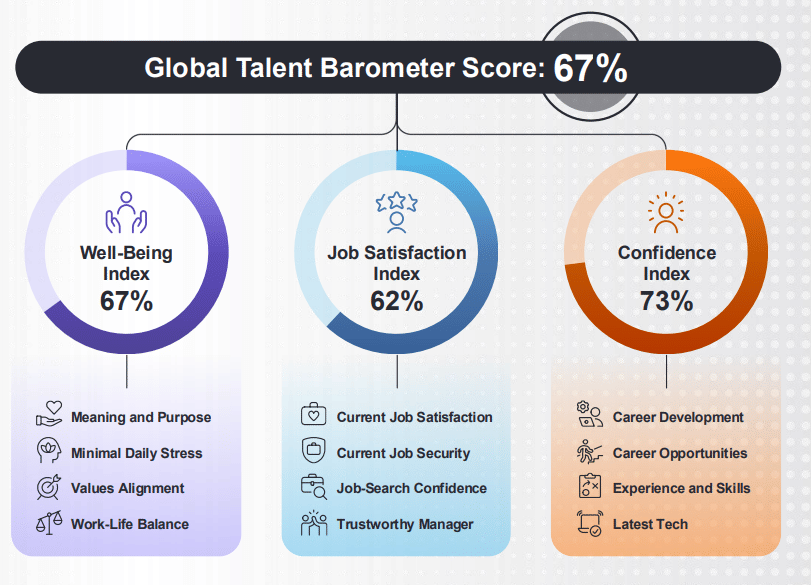
Singapore’s talent sentiment dipped to 63%, driven by weaker well-being and confidence.







Singapore’s talent sentiment edged down to 63% as well-being and confidence weakened, despite a modest rise in job satisfaction.
Singapore employees are increasingly holding on to their current jobs despite rising burnout, stress, and deepening concerns over job security, as fears around artificial intelligence reshape workplace sentiment.
According to the Global Talent Barometer 2026 released by ManpowerGroup, nearly three-quarters of workers in Singapore report experiencing burnout, while more than half worry their roles could be replaced by AI within the next two years. Yet many feel unable to move on.
The study, based on a survey of 515 workers conducted between September and October 2025, found that Singapore’s overall talent sentiment score dipped slightly to 63%, down one point from the previous year. The decline was largely driven by weaker well-being and confidence indicators, even as job satisfaction showed a marginal improvement.
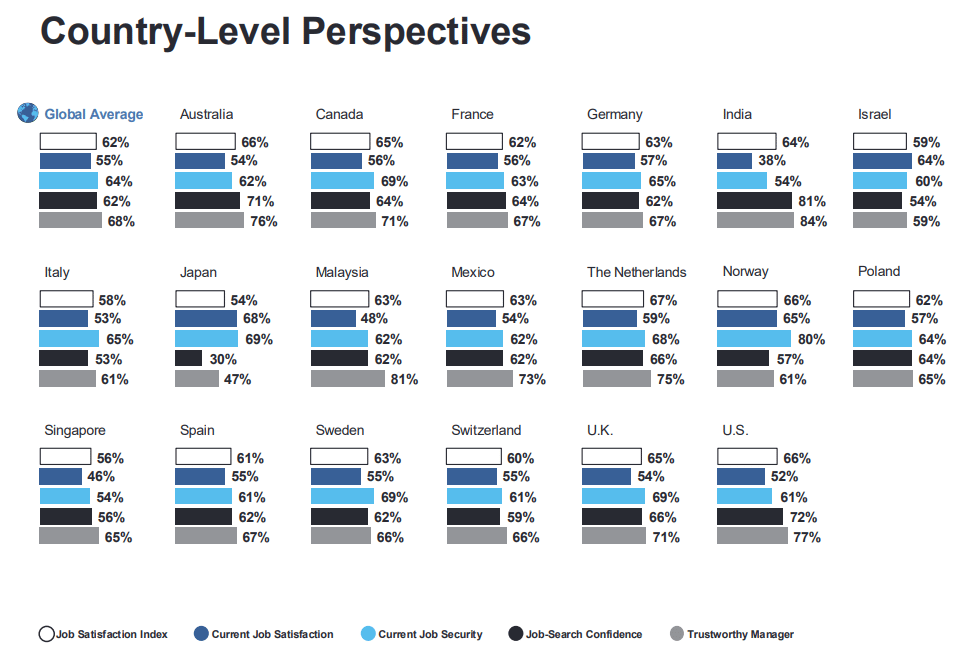
While 60% of employees say they intend to remain with their current employer, a striking 73% are actively exploring new opportunities, pointing to a workforce that feels stuck rather than settled.
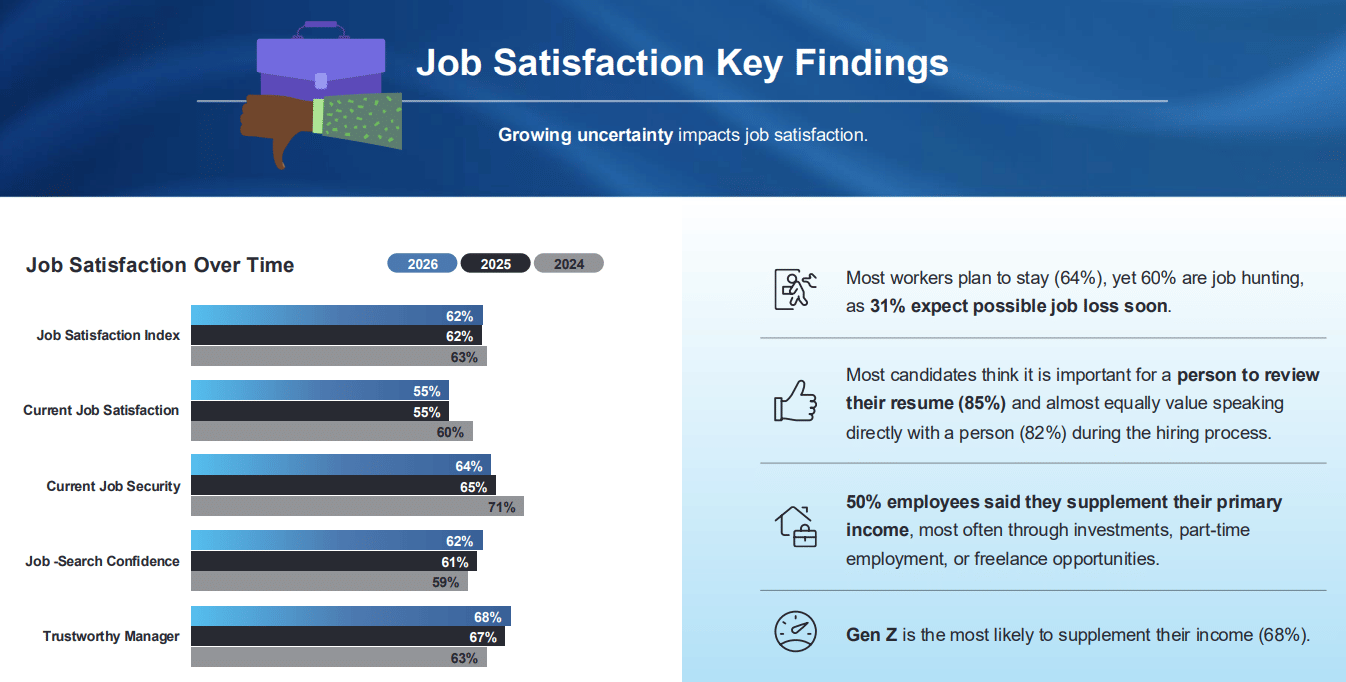
Job insecurity remains a major pressure point. Nearly four in ten workers expect there is a possibility of job loss in the next six months, while 58% fear AI-driven automation could make their roles redundant within two years, a figure only marginally lower than in 2025.
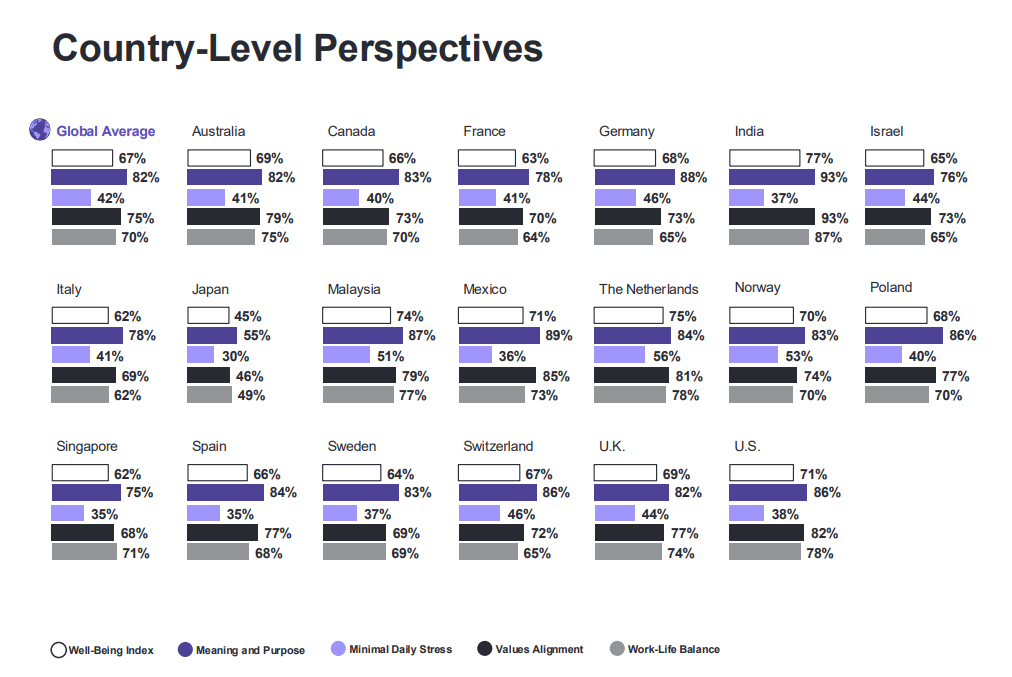
Stress levels remain elevated across workplaces. Around 53% of respondents report experiencing significant daily stress, and 72% say they have recently felt burned out. The leading causes cited include ongoing stress, heavy workloads, and uncertainty around job security.
These findings echo broader regional trends. A separate Workforce Preference Insights 2025 survey by JLL found that one in three employees in Singapore is considering leaving their current role within the next year, driven by the search for better pay, recognition, and workplace flexibility — further complicating retention efforts for employers.
Training and development continue to play a decisive role in career decisions. Research from Randstad Singapore shows that three in four workers place high value on learning opportunities, with nearly half saying they would reject a role that does not offer clear pathways for skill development.
There is also a growing appetite for technology-focused upskilling. More than half of employees expressed interest in AI training, while others prioritised IT and technological literacy, as well as data science and analytics.
“As Singapore moves deeper into an AI-driven economy, leaders are balancing two critical horizons,” said Linda Teo, Country Manager of ManpowerGroup Singapore.
“There’s the Now, sustaining business performance while guiding people through rapid digital transformation. And there’s the Next, equipping workers with future-ready skills and building confidence for an AI-enabled future that is still taking shape.”
Teo warned that transformation efforts cannot come at the expense of employee well-being. Many workers continue to experience high stress levels, and more than half report not having received recent training or mentorship.
Organisations, she said, must strike a careful balance between performance goals and initiatives that support mental health, resilience, and continuous learning, or risk a workforce that is present, but increasingly disengaged.
Author

Loading...