








Economy Policy
UK to ban social media for under-16s in major child online safety crackdown






Officials say the framework is modelled on similar measures introduced in Australia, while adding broader protections for gaming platforms and livestreaming services.
The UK government will ban children under the age of 16 from using major social media platforms, marking one of the most significant changes to online safety policy in the country’s history.
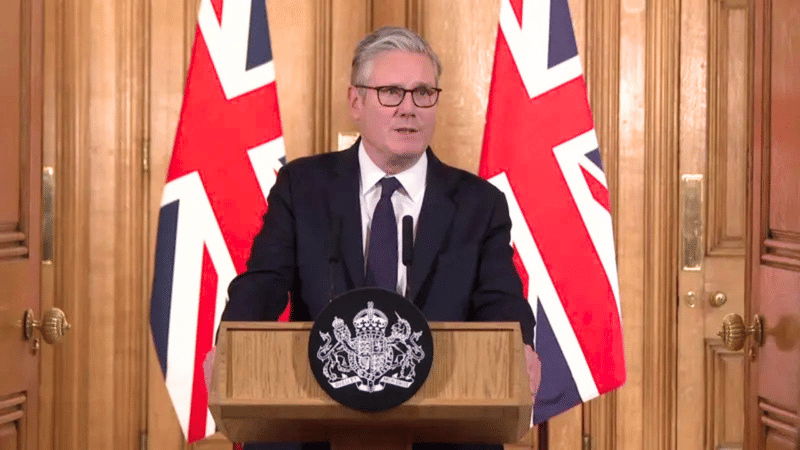
Announcing the move from Downing Street, Prime Minister Keir Starmer said the government had concluded that a complete ban was necessary to protect children from the harmful effects of social media.
The announcement has drawn support from several education groups, which argue that schools are increasingly dealing with the fallout from online abuse and harmful content. However, technology companies and some child rights advocates have questioned whether a blanket ban will be effective, warning that young people may migrate to less regulated online spaces.
Announcing the move from Downing Street, Prime Minister Keir Starmer said the government had concluded that a complete ban was necessary to protect children from the harmful effects of social media.
“I am not announcing this lightly, and I recognise it is not cost-free, as if social media has brought no benefits to young people,” Starmer said. “But government is about choices, and it’s clear to me that a full ban is the right choice.”
The proposed restrictions will apply to major platforms including Snapchat, TikTok, YouTube, Instagram, Facebook and platform X, while messaging services such as WhatsApp and Signal will remain exempt.
Starmer argued that social media platforms have become increasingly harmful to children, citing concerns over addiction, bullying and mental health.
“Social media is making children unhappy,” he said. “It is making it easier for bullies to harass and abuse children, and it is designed to be addictive, with features that lock you in for hours.”
The prime minister said the decision was informed not only by policy considerations but also by his experience as a parent.
“All I've ever wanted for my own children, hand on heart, is for them to be happy and for them to be safe. I think that's what any parent wants,” he said. “Can it really be said that social media creates a safe environment for children? I don't think I even need to answer those questions.”
Beyond the social media ban, the government plans to introduce wider safeguards on gaming and livestreaming services.
Restrictions on livestreaming and communication between children and strangers will be applied by default for under-16s and, in some cases, for 16- and 17-year-olds. Ministers are also considering overnight curfews and measures to reduce “infinite scrolling” among young users.
Starmer acknowledged that enforcement would be challenging but insisted that the government would not retreat from the proposal.
“I want this message to be heard loud and clear. I am not prepared to compromise on the safety and happiness of our children, and that is why this ban must happen, and why this ban will happen,” he said.
The prime minister also pushed back against claims that online safety measures could hinder technological innovation.
“I am a fan of tech and AI,” Starmer said. “Innovation is incredible in AI. Don’t tell me it’s impossible” for technology companies to develop effective child-protection measures.
“I am a fan of tech and AI,” Starmer said. “Innovation is incredible in AI. Don’t tell me it’s impossible” for technology companies to develop effective child-protection measures.
The government intends to bring legislation before Parliament later this year, with the new rules expected to come into force by spring 2027.
Officials say the framework is modelled on similar measures introduced in Australia, while adding broader protections for gaming platforms and livestreaming services.
The announcement has drawn support from several education groups, which argue that schools are increasingly dealing with the fallout from online abuse and harmful content. However, technology companies and some child rights advocates have questioned whether a blanket ban will be effective, warning that young people may migrate to less regulated online spaces.
Despite the debate, Starmer framed the policy as a defining step in protecting the next generation. “In this world, with this technology, it is hard as a parent to know what to do,” he said. “I think most parents will welcome this.”
Author
Loading...