








Strategic HR
GovTech Singapore lays off 38 employees in second phase of workforce restructuring



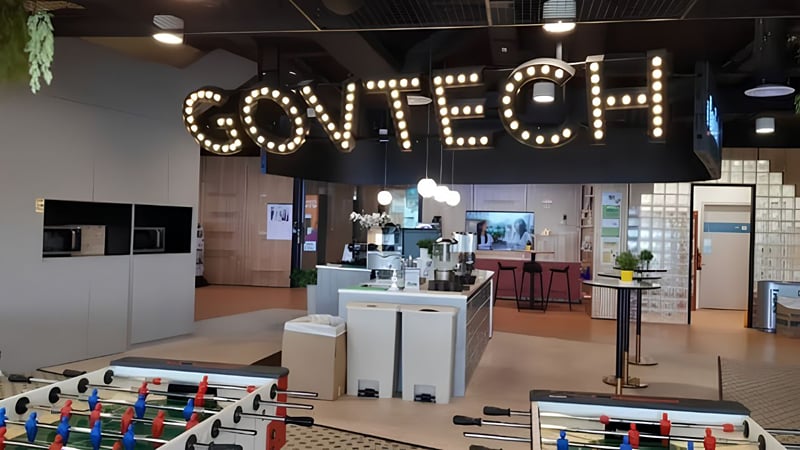
GovTech said it had prioritised retaining, retraining and redeploying employees wherever possible.
Singapore’s Government Technology Agency (GovTech) has laid off 38 employees in the second phase of its planned workforce restructuring, as it moves towards reducing its workforce by about 300 employees over two years.
The affected roles are primarily those centred on traditional project delivery.
The latest round is part of a broader transition to a new operating model, with GovTech planning to reduce 7% to 9% of its workforce.
The exercise affects staff deployed across 23 government agencies and is being carried out in three phases.
GovTech prioritises redeployment and retraining
GovTech said it had prioritised retaining, retraining and redeploying employees wherever possible.
Following the workforce review, 106 officers will remain in their current roles, while another 106 are eligible for conversion and apprenticeship pathways to transition into new positions.
"As with the first phase, we have prioritised retaining, retraining and redeploying officers wherever possible," it said.
"We recognise that these changes are difficult for affected colleagues."
The agency said it would continue working with the Public Service Division, the Skills and Workforce Development Agency and the Amalgamated Union of Statutory Board Employees (AUSBE) to support affected employees.
Assistance includes career coaching, job matching and placement support to help them secure suitable opportunities in the public service and private sector.
All employees affected by the second phase were informed by the end of Thursday.
Final round of layoffs expected in mid-2027
The latest exercise follows the first phase of retrenchments in July, when 93 officers were laid off. The third and final round is expected to take place in mid-2027, according to CNA.
Based on the figures reported so far, nearly 170 employees could be affected in the final phase, potentially making it the largest of the three rounds.
GovTech had reportedly informed staff about the planned final phase during a company-wide town hall last month.
The statutory board, which operates under Singapore’s Ministry of Digital Development and Information, had about 3,900 permanent and contract staff supporting the technology requirements of more than 50 government agencies.
Union negotiates enhanced support package
AUSBE said it was working closely with GovTech to support employees affected by the restructuring.
Since the first round in July, the union has explored alternatives, including retraining, apprenticeships and redeployment, to reduce the number of employees affected and help them transition into new roles.
For employees leaving the agency, AUSBE said it had negotiated an enhanced support package beyond the provisions of its collective agreement.
The package, agreed at the start of the restructuring exercise, will apply to employees affected across all three phases.
"AUSBE will continue to ensure that they are treated fairly and with dignity throughout the process," the union said.
Affected employees can also access career coaching, job matching and skills upgrading advice through NTUC’s Employment and Employability Institute (e2i).
Career coaches were present on-site to provide assistance, while affected employees have been invited to attend a virtual briefing on technology job opportunities on 12 November.
Vellermathi Machap, chairperson of the AUSBE-GovTech branch, said the union had been engaging with members to understand their concerns and support requirements.
"Restructuring is never easy, and we recognise the uncertainty that affected officers and union members are facing," she said.
She added that the union’s immediate priority was to ensure affected employees were treated fairly and received the support required to transition into their next jobs.
GovTech says restructuring is not AI-driven
GovTech’s retrenchment exercise has drawn attention in Singapore, where public sector layoffs are relatively uncommon.
According to a written parliamentary reply in November 2011 by then Deputy Prime Minister and Minister-in-charge of the Civil Service Teo Chee Hean, the last publicly reported retrenchments in the civil service dated from 2006 to 2010, when 20 officers left under the Special Resignation Scheme.
In July, GovTech chairman Chng Kai Fong told staff that the restructuring was “not an AI-driven downsizing exercise”, adding that the shift had begun years before the current wave of artificial intelligence adoption.
In August, Acting Manpower Minister Jasmin Lau told Parliament that GovTech had anticipated the need to reshape its workforce and had invested significantly in pilot programmes and apprenticeships to retrain or redeploy employees.
However, she said there were limits to how quickly and extensively the transition could be implemented.
The restructuring reflects GovTech’s broader efforts to realign its workforce with a new operating model, while using retraining and redeployment pathways to help employees move into roles suited to its evolving technology requirements.
Topics
Author
Loading...