








Workforce Planning
Long Thanh Airport faces shortage of 2,000 workers as completion deadline nears






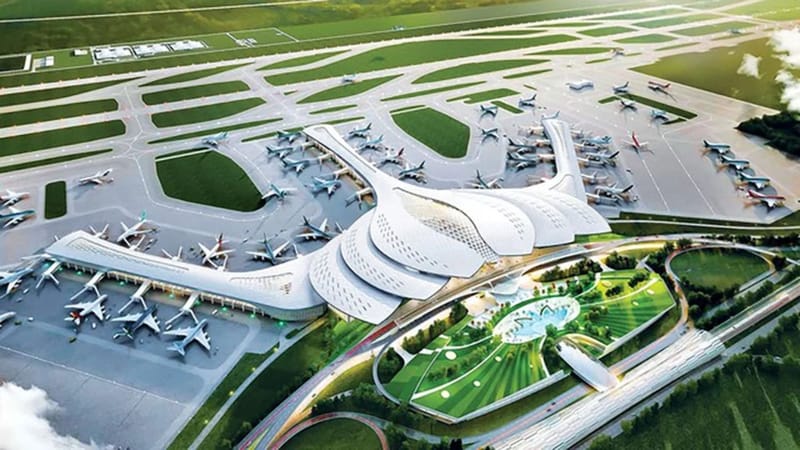
More than 6,800 workers are currently deployed across the construction site, an increase of over 6.5% from the end of May.
Vietnam's flagship Long Thanh International Airport project is facing a shortage of nearly 2,000 workers as construction enters its final acceleration phase, raising fresh concerns over labour availability ahead of its scheduled completion, according to multiple media reports.
The airport, located in Dong Nai Province, is now more than 76% complete, according to the Airports Corporation of Vietnam (ACV).
Contractors have intensified efforts on site, operating three shifts across four work crews as part of a 180-day campaign aimed at keeping the project on schedule.
More than 6,800 workers are currently deployed across the construction site, an increase of over 6.5% from the end of May. However, demand for skilled technical workers and specialised equipment operators continues to outstrip supply.
Nguyen Duc Hung, acting chief executive, ACV said, “The developer is urging contractors to increase workforce numbers beyond current requirements to maintain round-the-clock construction activity.”
Race against weather
Project teams are prioritising critical infrastructure works before seasonal rains disrupt progress.
Several major milestones have already been achieved, including the completion of the tunnel system and full electricity supply for construction operations. Work on the viaduct in front of the passenger terminal is also nearing completion, with only seven beam segments remaining.
During a site inspection on Friday, Construction Minister Tran Hong Minh reiterated the urgency of the project. He said, "No delay in schedule; racing against time."
The minister instructed project stakeholders to closely monitor construction volumes and payment procedures while ensuring engineers and workers receive adequate support as they continue working extended shifts.
Military support deployed
To help maintain momentum, military personnel have been mobilised to assist with construction-related activities.
Minh called for closer coordination between ACV, contractors and military units to support site clearance, landscaping and tree planting.
He also stressed the need to accelerate construction of internal transport routes, which are considered essential for the airport's integrated operations.
For the terminal viaduct, contractors have been directed to increase manpower, redeploy support staff and expedite finishing works.
"If necessary, we must work day and night to catch up with the schedule," the minister said.
Government pressure
The workforce challenge comes as the Vietnamese government intensifies pressure to deliver the project on time.
During a separate meeting with Dong Nai provincial authorities, Prime Minister Le Minh Hung instructed local agencies to immediately address outstanding legal and technical issues that could affect the airport's launch.
"This is a non-negotiable requirement," the cabinet leader said.
He also urged faster delivery of surrounding transport infrastructure, including the Bien Hoa-Vung Tau Expressway, Ho Chi Minh City Ring Road 3, the Bien Hoa-Vung Tau railway line and other connecting routes designed to improve access to the airport.
Mega project ambitions
Situated around 40 kilometres east of Ho Chi Minh City, Long Thanh International Airport is one of Vietnam's largest infrastructure projects, carrying a total investment of VND336.63 trillion (US$14.12 billion).
The first phase, valued at nearly VND110 trillion (US$4.18 billion), is scheduled for completion by the end of 2026. Once operational, it will be capable of handling 25 million passengers and 1.2 million tonnes of cargo annually.
Expansion plans will continue through 2035, when a second runway and terminal are expected to increase capacity to 50 million passengers and 1.5 million tonnes of cargo each year.
By 2050, Long Thanh is projected to handle up to 100 million passengers and five million tonnes of cargo annually, positioning it among the region's largest aviation hubs.
Author
Loading...