








Skilling
More career support measures for Singapore workers to be unveiled at Budget 2026: PM Wong






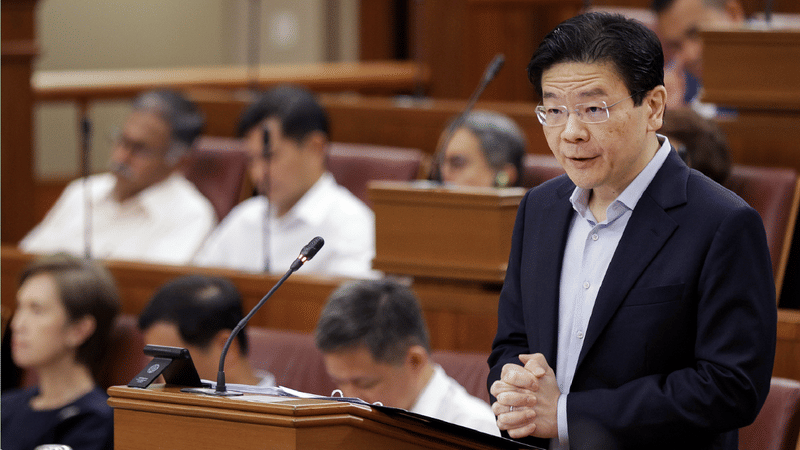
PM Wong is also expected to outline plans to strengthen Singapore’s ambitions as an artificial intelligence hub, alongside measures to manage AI’s impact on jobs through reskilling initiatives.
Prime Minister Lawrence Wong has said that additional job support measures will be announced at Singapore’s Budget 2026, as the government responds to mounting concerns over employment amid rapid technological change and global uncertainty.
In a video posted on Wednesday (Feb 11), PM Wong said the government is reviewing how it can “provide more support for Singaporeans whether it's through career transitions or to help uplift our workers”.
“Our economy performed well last year and labour market conditions remain strong. But I know many Singaporeans are concerned about jobs, especially with rapid technological change and a very uncertain external environment,” he said.
“The government will do more to support Singaporeans in navigating these changes. And that includes helping you manage job transitions, equipping you with relevant skills to stay competitive and ensuring that all Singaporeans are able to secure good jobs with rising incomes.”
He added that further details will be shared during his Budget statement in Parliament at 3.30pm on Thursday (Feb 12).
In the video, PM Wong spoke with two workers about their career journeys and suggestions for strengthening Singapore’s support system.
One of the workers, who recently transitioned into the education field after nearly two decades in the IT industry, said greater support for training would ease mid-career switches. “If there will be more support in terms of taking new courses, training, I think that’ll be very helpful,” she said.
She described the SkillsFuture programme as “really very helpful”, which she utilised to upskill, but noted its limitations. “Sometimes there may be certain courses that we are interested in but which may not be supported. So if there can be more options, especially for mid-career transitioners like myself, I think that will be very helpful, very supportive.”
The second worker, who has spent more than 20 years in the lift and escalator sector and now specialises in escalator maintenance, credited company-sponsored training for helping him upgrade and eventually train others. He added that the Progressive Wage Model (PWM) for lift and escalator technicians has been “very helpful”, boosting public confidence and professional standards.
PM Wong noted that the PWM enables workers to upgrade their skills while uplifting wages. Looking ahead, he stressed that career transitions are likely to become more common. “In time to come, given the rapid changes in technology and workplaces, I think people will have more career transitions,” he said. “It may be working even within the same company, you may move from one specialisation to another, or you may be moving from one industry to another industry. But the work will change and evolve.”
“We need to help Singaporeans continually upgrade themselves to stay relevant. The mindset of lifelong learning, I think, slowly is seeping in.”
Acknowledging feedback about the complexity of navigating training options, PM Wong said the government is looking at improving the curation of information and making platforms “more user-friendly”, adding that “there’s scope for us to do better”.
Beyond worker support, Budget 2026 is expected to address broader issues including cost-of-living pressures and Singapore’s long-term economic positioning. PM Wong is also expected to outline plans to strengthen Singapore’s ambitions as an artificial intelligence hub, alongside measures to manage AI’s impact on jobs through reskilling initiatives.
An update on the Economic Strategy Review launched last year is also anticipated. Economists have suggested that existing support schemes, including the Community Development Council (CDC) vouchers introduced in previous Budgets, could be recalibrated with smaller payouts or tighter income criteria.
Author
Loading...