








AI & Emerging Tech
Singapore National Day 2026: 10 people-and-work shifts shaping the nation’s next chapter



 ||
||

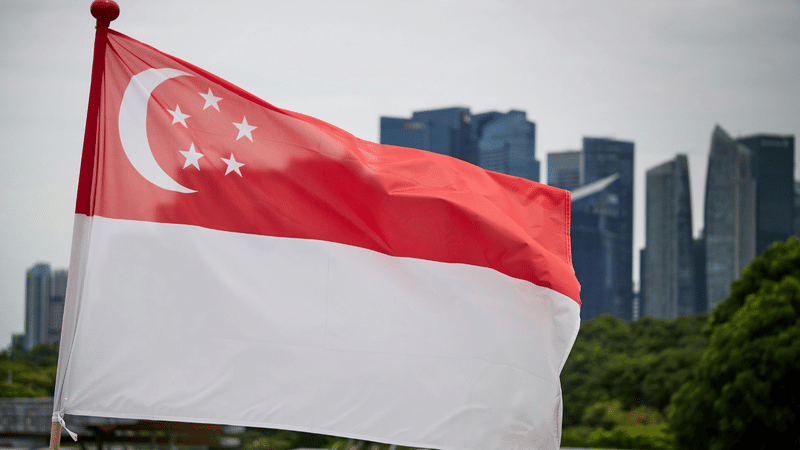
Singapore is preparing its workforce for a world where careers will last longer, skills will change faster, work will become more fluid and technology will increasingly shape how jobs are performed
As Singapore marks its 61st National Day, its workplace story is being shaped by a familiar strength: the ability to anticipate change before it becomes a crisis.
Over the past year, that instinct has been visible across the country’s people and work landscape. Artificial intelligence has moved from being primarily a technology conversation to a workforce priority. Longer working lives are becoming the norm.
Platform workers are receiving stronger protections. Parental leave is expanding, workplace fairness is moving into legislation, and skills policy is being reorganised around the realities of a fast-changing labour market.
None of these developments exists in isolation. Together, they point to a broader ambition: to build a labour market that remains competitive while giving workers greater resilience, security and opportunity through periods of disruption.
Here are 10 shifts that have shaped Singapore’s people and work landscape over the past year.
1. AI became a workforce issue, not just a technology issue
Few forces are changing the workplace as quickly as artificial intelligence, and Singapore has increasingly shifted the conversation from AI adoption to AI readiness.
In April 2026, the Ministry of Manpower (MOM), National Trades Union Congress (NTUC) and Singapore National Employers Federation (SNEF) announced plans to form a Tripartite Jobs Council to address AI’s impact on workers, jobs and businesses.
The move reflects a recognition that AI will not simply create new technology roles, rather it will change existing jobs, reshape workflows and alter the skills employers need. The impact is already being felt by employees.
According to a recent Microsoft study, 66% of AI users in Singapore said they are producing work today that would not have been possible a year ago, compared with 58% globally. Among advanced users classified as “Frontier Professionals”, the figure rises to 82%, highlighting how deeply AI is becoming embedded in the workflows of high-performing employees.
The tripartite partners said the council would support workers and businesses through the AI transition, while addressing the risk of widening skills gaps.
For people leaders, that makes AI a workforce-planning question as much as a technology question: Which jobs will change? Which skills will become more valuable? And how quickly can people be reskilled? Singapore’s long-standing investment in lifelong learning is now being tested against these questions.
2. Skills policy was redesigned around the future of work
Singapore also changed the architecture through which workers and employers access skills and career support.
From 1 July 2026, SkillsFuture Singapore and Workforce Singapore were merged into the new Skills and Workforce Development Agency (SWDA).
The new statutory board brings together responsibilities spanning skills development and workforce transformation, signalling a more integrated approach to helping people navigate careers. The Skills and Workforce Development Agency Act 2026 came into operation on 1 July.
And the timing matters because as AI shortens the shelf life of some skills and creates demand for others, the traditional model of acquiring skills early in life and applying them for decades is becoming less relevant.
Singapore’s response is increasingly centred on making learning a continuous part of working life.
3. Longer careers became the new reality
Singapore took another step towards preparing for an ageing workforce when its retirement and re-employment ages increased on 1 July 2026.
The minimum retirement age rose to 64, while the re-employment age increased to 69, allowing eligible older workers to remain in employment for longer.
But longer careers also require stronger support for career transitions. Singaporeans aged 40 and above can access the SkillsFuture Mid-Career Enhanced Subsidy, covering up to 90% of selected course fees, while the SkillsFuture Level-Up Programme offers a S$4,000 SkillsFuture Credit top-up and a monthly training allowance of up to S$3,000.
The programmes are showing encouraging outcomes. Close to nine in 10 CCP participants aged 51 and above remained employed 24 months after starting the programme, while more than six in 10 MCPP participants aged 51 and above found employment within six months of completing or exiting the programme.
Flexible work is also emerging as an important part of sustaining longer careers. Government studies found that around seven in 10 companies offering flexible work arrangements reported better employee retention, while six in 10 reported higher productivity.
For employers, the focus is shifting from simply extending working lives to making longer careers sustainable through skills, flexibility and job redesign.
4. Platform work moved closer to mainstream employment protection
The rise of delivery riders, private-hire drivers and other platform workers has challenged traditional definitions of employment.
Singapore's Platform Workers Act, which came into effect in January 2025, brought stronger protections for platform workers, including work injury compensation and CPF-related protections.
But the year also showed that regulation alone cannot address every risk. In 2026, MOM convened a Platform Worker Safety Workgroup after concerns around the relatively high incidence of fatal and major injuries among platform workers. The group brings together government agencies, platform operators, NTUC and platform work associations.
The focus is particularly relevant because much of platform work happens outside traditional workplaces, with workers exposed to road and traffic risks.
The evolution of platform work therefore raises a broader question for the future of work: How do you extend workplace protections to people whose workplaces are constantly moving?
5. Workplace fairness moved from principle to legislation
Singapore's long-standing tripartite approach to fair employment took a significant step forward with the passage of the Workplace Fairness legislation.
The Workplace Fairness Bill was passed in January 2025, followed by the Workplace Fairness (Dispute Resolution) Bill in November 2025. Together, they establish a legislative framework to strengthen protection against workplace discrimination and provide workers with avenues for dispute resolution. The significance goes beyond compliance.
As Singapore's workforce becomes older and more diverse, organisations are being pushed to examine how decisions around hiring, promotion, performance and career progression are made.
For employers, fairness is increasingly moving from a statement of values into a formal part of workplace governance.
6. Flexibility became part of the employment contract conversation
Hybrid work may no longer dominate workplace headlines as it did during the pandemic, but flexibility has not disappeared.
Singapore's Tripartite Guidelines on Flexible Work Arrangement Requests, which took effect in December 2024, established a formal process through which employees can request flexible work arrangements and employers must properly consider those requests.
The guidelines cover arrangements including flexible working hours, locations and workloads. Employers are expected to assess requests on reasonable business grounds and respond within two months.
Importantly, the framework does not require employers to approve every request. Instead, it formalises a conversation that is becoming increasingly important in modern workplaces: how organisations balance productivity and business needs with employees' changing expectations around where and when work gets done.
By 2026, flexibility is therefore less about whether work is 'remote' or 'in-office' and more about whether organisations have the maturity to design work around outcomes.
7. Parenthood became more compatible with working life
Singapore also strengthened support for working parents. For children born or adopted from 1 April 2026, eligible working parents receive 10 weeks of shared parental leave, up from six weeks for children covered by the previous arrangement. The leave can be shared between parents and taken within 12 months of the child's birth.
The change comes as Singapore continues to grapple with demographic pressures and the challenge of supporting families.
For employers, family-friendly policy increasingly intersects with talent strategy. Employees' decisions about whether to stay, return or progress at work can be influenced significantly by how organisations accommodate caregiving responsibilities.
The larger message is clear: supporting parenthood is becoming less of a standalone benefit and more of a workforce sustainability issue.
8. Lower-wage workers continued to see stronger protections
Singapore's Progressive Wage Model has continued to evolve, with the country's approach increasingly focused not only on raising wages but also on improving career progression, skills and employment conditions.
The Local Qualifying Salary, which applies to local employees in firms that hire foreign workers, is now S$1,800 for full-time workers. The mechanism is designed to ensure local workers are paid meaningfully while also interacting with the country's foreign-worker quota system.
Another notable development came in July 2026, when MOM announced plans to increase the minimum annual leave entitlement for outsourced Progressive Wage Model workers from seven to 10 days, phased from 2029.
The change will cover workers in five sectors i.e. cleaning, security, landscape, lift and escalator, and waste management —
and is expected to benefit around 60% of outsourced workers in these sectors.
The shift is significant because it recognises that job quality is about more than wages. For workers in essential services, continuity of employment, leave, skills and career progression are increasingly becoming part of the definition of a good job.
9. Singapore continued to recalibrate its approach to global talent
Singapore's workforce strategy has always depended on balancing local talent development with access to international skills.
That balance continued to evolve this year. MOM announced that the minimum qualifying salary for Employment Pass holders will rise from S$5,600 to S$6,000 for new applications from January 2027, while the S Pass qualifying salary will increase from S$3,300 to S$3,600.
The thresholds are benchmarked against local wage levels and are intended to ensure foreign professionals complement rather than undercut the local workforce.
At the same time, Singapore continues to expand pathways to access foreign workers in sectors where businesses face genuine labour shortages.
The direction is therefore not simply about reducing or increasing foreign talent. It is about maintaining a workforce mix that supports competitiveness while ensuring local workers continue to have access to quality jobs and wage growth.
10. A resilient labour market entered a more uncertain phase
For all the structural changes taking place, Singapore's labour market has remained relatively resilient.
In the first quarter of 2026, total employment grew by 5,000, marking the 18th consecutive quarter of employment growth. Unemployment and retrenchments remained broadly stable.
The underlying numbers are important because they provide context for the policy changes. Singapore is not reshaping its labour market from a position of crisis. It is doing so while employment remains relatively strong and while businesses continue to face changing economic conditions.
MOM's 2026 assessment also showed that real median incomes grew by 8.3% between 2020 and 2025, while real incomes of lower-wage workers grew by 15% over the same period.
Yet uncertainty remains, particularly around geopolitics, technology and the pace of economic transformation.
That makes resilience the defining theme of Singapore's next phase of work.
Beyond the numbers, Singapore is building a workforce that can adapt.
Taken individually, Singapore's workplace developments over the past year may look like separate policy interventions, with a higher retirement age, more parental leave, stronger platform-worker protections, new skills institutions or tighter foreign-worker salary thresholds.
All together, they reveal something more strategic. Singapore is preparing its workforce for a world where careers will last longer, skills will change faster, work will become more fluid and technology will increasingly shape how jobs are performed. That puts a new responsibility on employers.
The future-ready organisation will not simply be the one that adopts AI fastest or attracts the most talent. It will be the one that can continuously redesign work, build skills, support different generations, create fair opportunities and give people enough security to navigate change.
As Singapore celebrates its 61st National Day, its people-and-work story is therefore not only about how the workplace has changed over the past year. It is about the kind of workforce the country wants to carry into its next chapter: more adaptable, more inclusive and better equipped to keep learning as the definition of work itself evolves.
Topics
Author
Loading...